How to Inflate a Balloon with Vinegar and Baking Soda — Easy Step-by-Step Guide
Discover the magic of chemistry as you inflate a balloon using a simple reaction between vinegar and baking soda. A classic, screen-free science experiment for the whole family!
Quick answer
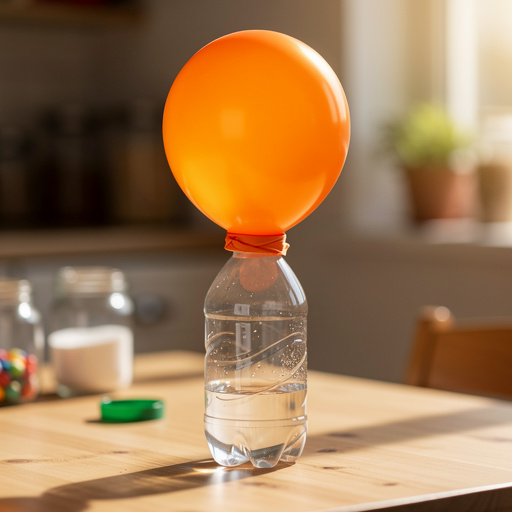
To inflate a balloon with vinegar and baking soda, you need a bottle, vinegar, baking soda, a balloon, and about 10 minutes. Start by pouring vinegar into the bottle. This beginner-friendly activity has 7 steps and is perfect for families with kids aged 6 and up.
What you need
Shop on Amazon · As an Amazon Associate we earn from qualifying purchases. Links above are affiliate links — we may earn a commission at no extra cost to you.
Embark on a captivating journey into the world of chemistry with this classic and incredibly easy science experiment! Inflating a balloon using just vinegar and baking soda is a fantastic way to demonstrate a fundamental chemical reaction in a fun, hands-on manner. It’s a perfect screen-free activity that sparks curiosity and encourages observation, making it an ideal choice for family fun, classroom demonstrations, or simply a rainy-day project. Get ready to witness a little bit of everyday magic unfold before your eyes!
On this page
Step-by-Step Instructions
- 1
Gather all your materials on a flat, easy-to-clean surface. Ensure you have everything readily accessible before you begin, and consider placing a tray or some newspaper underneath your workspace to catch any potential spills, making cleanup a breeze.
- 2
Carefully pour 1/2 cup (120 ml) of white vinegar into the empty plastic bottle. Use a measuring cup to ensure accuracy, and try to pour it directly into the bottle's opening to avoid any drips or splashes.
- 3
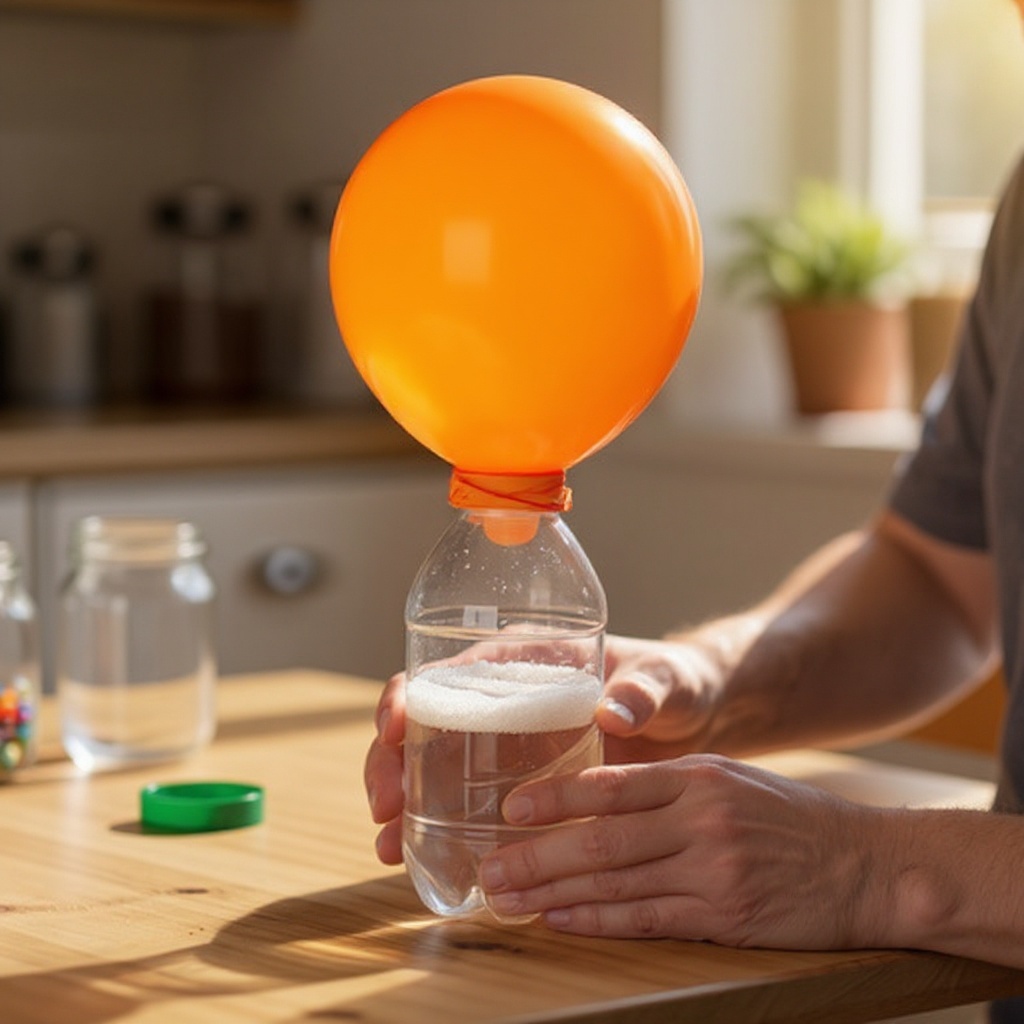
Now, it's time to prepare the balloon. Gently stretch the opening of the balloon a few times by pulling it in different directions. This makes the balloon more flexible and easier to fit over the bottle's mouth later on, preventing it from tearing.
- 4
Using a funnel, carefully add 2-3 tablespoons of baking soda into the stretched balloon. If you don't have a funnel, you can gently spoon the baking soda in by hand, but be extra cautious not to spill any. Ensure the baking soda is concentrated towards the neck of the balloon.
- 5
Gently attach the opening of the balloon over the mouth of the plastic bottle. Make sure to create a tight seal, ensuring there are no gaps where gas could escape. It's crucial that the baking soda remains inside the balloon and does NOT fall into the vinegar at this stage.
- 6
Once the balloon is securely attached and you've confirmed a good seal, it's time for the exciting part! Carefully lift the balloon upwards, allowing the baking soda that's collected in its neck to tumble down into the vinegar inside the bottle.
- 7
Observe the immediate reaction! The mixture will begin to fizz and bubble vigorously as carbon dioxide gas is produced. Watch as this invisible gas fills the bottle and then travels up into the balloon, causing it to slowly but surely inflate.
- 8
Continue to observe the inflation process. The balloon will expand as more carbon dioxide gas is generated. You can gently swirl the bottle to encourage any remaining baking soda to react with the vinegar, maximizing the gas production.
- 9
Once the fizzing subsides and the balloon has reached its maximum inflation, carefully remove the balloon from the bottle. You can tie it off to preserve the inflated state, or simply admire your chemically inflated creation!
- 10
Discuss the results. Talk about what you saw happening – the fizzing, the bubbles, and the balloon inflating. This is a great opportunity to introduce or reinforce the concept of a chemical reaction and gas production.
- 11
Clean up your workspace. Dispose of the vinegar and baking soda mixture down the drain, rinse the bottle and balloon, and wipe down any surfaces that may have gotten wet or sticky.
- 12
Optional: If you used a tray, carefully lift it and pour any excess liquid into the sink. Rinse the tray thoroughly.
Tips & Troubleshooting
- 1If the balloon doesn't inflate much, don't worry! First, check for any leaks around the balloon's seal on the bottle; a loose seal is a common culprit. If the seal is tight, try adding a little more baking soda or vinegar to the mixture to see if that boosts the reaction.
- 2Experiment with different amounts of baking soda and vinegar to observe how it affects the inflation. Does doubling the baking soda create a significantly bigger balloon? Does using more vinegar have a noticeable impact? Keep a record of your observations for a mini science journal!
- 3Try using a different type of bottle, such as a wider soda bottle or a narrower glass jar, to see if the shape or size of the container changes the reaction or the rate of inflation. Different bottle openings can affect how easily the gas escapes into the balloon.
- 4This experiment can be a bit messy due to the fizzing and potential for spills, so it's a good idea to place the bottle on a tray, cover your workspace with newspaper, or conduct the experiment outdoors. This will make cleanup much easier and less stressful.
- 5For a fun visual twist, try adding a drop or two of food coloring to the vinegar *before* adding the baking soda. While the food coloring won't change the color of the carbon dioxide gas itself (as it's invisible), it will color the liquid mixture, making the fizzing action more visually striking.
- 6Ensure your baking soda is fresh. Old baking soda can lose some of its potency, which might affect the strength of the chemical reaction and the resulting inflation. If your baking soda has been open for a long time, it might be worth trying a fresh box.
- 7The temperature of the vinegar can also play a role. While room temperature vinegar works perfectly, you could experiment with slightly warmed vinegar (not hot!) to see if it speeds up the reaction. Be cautious when handling any liquids that are not at room temperature.
- 8If you're having trouble getting the baking soda into the balloon, try using a wider-mouthed balloon or a very narrow funnel. Sometimes, the baking soda can clump, so gently tapping the funnel or balloon can help it flow smoothly.
Related Activities You Might Enjoy
Frequently Asked Questions
Why does the balloon inflate with vinegar and baking soda?
The inflation of the balloon is a direct result of a classic acid-base chemical reaction. Vinegar is an acid (acetic acid), and baking soda is a base (sodium bicarbonate). When these two substances are mixed, they react to produce carbon dioxide gas (CO2). This gas is released in the form of bubbles within the bottle. As the reaction continues, more and more carbon dioxide gas is generated, increasing the pressure inside the bottle. Since the balloon is attached to the bottle's opening, this pressure forces the gas to fill the balloon, causing it to expand and inflate. It's a tangible demonstration of gas production through a chemical transformation.
How much baking soda and vinegar should I use for the balloon experiment?
A good starting point for this experiment is approximately 1/2 cup (120 ml) of white vinegar and 2-3 tablespoons (about 30-45 grams) of baking soda. These quantities generally produce a satisfying amount of carbon dioxide gas to inflate a standard balloon. However, feel free to experiment! You can adjust these amounts to see how they affect the balloon's inflation. For instance, using slightly more baking soda might lead to a larger inflation, provided there's enough vinegar to react with it. Conversely, adding more vinegar might prolong the reaction but not necessarily increase the maximum balloon size if the baking soda is the limiting factor.
Can I use a different type of acid instead of vinegar?
Yes, you can absolutely try other mild acids instead of vinegar! Lemon juice, for example, contains citric acid and will also react with baking soda to produce carbon dioxide gas. Other citrus juices like lime juice can also be used. However, vinegar is often preferred for this experiment because it's readily available, inexpensive, safe to handle, and produces a robust and predictable amount of carbon dioxide gas. While other acids might work, the strength and availability of vinegar make it a reliable choice for consistent results in this particular science demonstration.
What if my balloon doesn't inflate?
If your balloon isn't inflating, there are a few common reasons to check. Firstly, ensure there are no leaks around the balloon's seal on the bottle; even a small gap can allow the gas to escape. Re-attach the balloon securely. Secondly, verify that you've used sufficient amounts of both baking soda and vinegar. If one ingredient is too little, the reaction might be too weak. Lastly, make sure the baking soda has had enough time to react with the vinegar. Gently swirling the bottle can help ensure all the baking soda comes into contact with the vinegar. If the baking soda is old, it might have lost its reactivity, so try using fresh baking soda.
Is this experiment safe for young children?
This experiment is generally very safe for young children when conducted with adult supervision. The ingredients, vinegar and baking soda, are non-toxic and commonly found in households. The reaction itself is not explosive or dangerous. However, it's always a good practice to supervise children closely, especially when handling the bottle and balloon, to prevent any accidental spills or the balloon being placed over the mouth or nose. Wearing safety glasses is optional but can add an extra layer of protection and make children feel like real scientists. Emphasize gentle handling and careful observation throughout the process.
Can I make the balloon inflate bigger?
To potentially inflate the balloon bigger, you can experiment with increasing the quantities of both vinegar and baking soda, while maintaining a reasonable ratio. For instance, using a larger bottle (like a 2-liter soda bottle) and proportionally increasing the vinegar and baking soda can lead to a more significant gas production. Ensure the balloon is large enough to accommodate the extra gas. Another factor is the seal; a tighter seal means less gas escapes. You can also try ensuring all the baking soda reacts by gently swirling the bottle. Remember, there's a limit to how much gas a balloon can hold before popping, so be mindful of over-inflation.
What Next?
Congratulations on successfully inflating a balloon using the power of chemistry! This experiment is a fantastic springboard for further scientific exploration. Consider trying different types of bottles or even varying the temperature of the vinegar to observe any changes. You can also research other common household items that produce gas when mixed. While the inflated balloon is a temporary marvel, the knowledge gained is lasting. Display your inflated balloon proudly for a short while, or gently deflate it and discuss what happened. This simple experiment opens the door to a universe of scientific discovery!
Free: 10 Paper Crafts Anyone Can Make in 5 Minutes
Get our beginner guide + new craft ideas weekly.
No spam. Unsubscribe anytime.
Did you complete this activity?
Related
You might also like

National Geographic Crystal Garden

Sparkling Crystal Garden

Grape to Raisin Density Change
DIY Rainbow Walking Water Experiment
Cloud Dough Slime Creation