How to Create a Story Spinner Dice Game — Easy Step-by-Step Guide
Unleash your family's imagination with a DIY Story Spinner Dice Game! This fun, screen-free activity uses simple materials to create endless storytelling adventures.
Quick answer
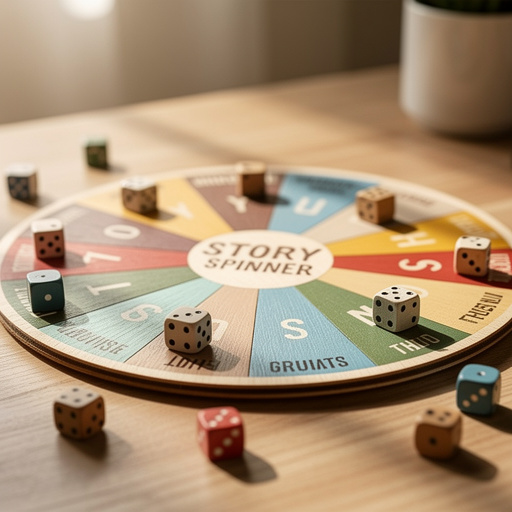
To make a Story Spinner Dice Game, you need cardstock, markers, and dice, taking about 45 minutes. Start by drawing your story elements on cardstock. This beginner-friendly activity has 10 steps and is perfect for families with kids aged 6 and up.
What you need
Shop on Amazon · As an Amazon Associate we earn from qualifying purchases. Links above are affiliate links — we may earn a commission at no extra cost to you.
Looking for a way to spark creativity and encourage imaginative play within your family? The Story Spinner Dice Game is a fantastic DIY project that transforms simple craft supplies into a gateway for endless storytelling adventures. This engaging, screen-free activity is perfect for rainy days, family game nights, or simply as a fun way to bond. It’s designed to be accessible for beginners, making it an ideal project for parents and children to create together, fostering both artistic expression and collaborative storytelling skills. Get ready to embark on fantastical journeys with this easy-to-make game!
On this page
Step-by-Step Instructions
- 1
On the cardstock, use the ruler and pencil to draw a circle approximately 7 inches in diameter. This will be your spinner base. Ensure the circle is centered on the cardstock to allow for even sectioning and a balanced spinner.
- 2
Divide the circle into 6 equal wedge-shaped sections by drawing lines from the center to the edge. You can use a protractor for precision by marking 60-degree angles from the center, or you can carefully eyeball it by drawing a cross through the center and then bisecting each resulting quadrant.
- 3
In each of the 6 sections, draw a simple icon or symbol representing a core story element. For instance, a house for 'setting,' a stick figure for 'character,' a tree for 'object,' a question mark for 'problem,' a sun for 'time,' and a cloud for 'weather.' Keep the icons simple and easily recognizable for all players.
- 4
Color each section with a different permanent marker color, making sure the icons are clear and distinct. Using bright, contrasting colors will make the spinner more visually appealing and easier to read during gameplay. Ensure the marker ink is fully dry before proceeding to the next step.
- 5
On the regular paper, draw 6 smaller circles, each about 1.5 inches in diameter. These will serve as the labels for your dice, providing the specific story elements for each category. You can trace around a coin or a small lid to get uniform circles.
- 6
For each of the 6 story element categories you drew on the spinner, write a corresponding word or short phrase in the center of each small paper circle. For example, for the 'character' section, write 'brave knight,' 'curious cat,' 'sleepy dragon.' For 'setting,' write 'enchanted forest,' 'busy city,' 'creaky old house.' Aim for variety and creativity in your word choices to inspire diverse stories.
- 7
Cut out the 6 small paper circles precisely along their drawn lines. Take your time with this step to ensure the labels are neat and easy to read, which will enhance the overall look and functionality of your dice.
- 8
Glue or tape one paper circle onto each of the blank dice faces. Ensure the labels are centered on each die face and securely attached to prevent them from peeling off during play. Allow glue to dry completely if you used a glue stick.
- 9
If you want a more traditional spinner mechanism, create a simple spinner arrow. Cut a small arrow shape from cardstock, about 2-3 inches long, and attach it to the center of your spinner base using a brad fastener. This allows the arrow to spin freely.
- 10
Test your spinner by flicking the arrow (or your finger if you don't have an arrow). Ensure it spins smoothly and lands on each section with reasonable fairness. If it tends to stick or favor certain sections, you might need to adjust the balance or the surface it's on.
- 11
Once the glue is dry and your spinner is functioning well, your Story Spinner Dice Game is ready to play! Gather your family and prepare for an imaginative adventure.
- 12
To play, one player spins the spinner. Whatever section the spinner lands on determines the category of the story element you'll need to incorporate. For example, if it lands on 'Character,' you'll be looking for a character-related word on the dice.
- 13
After the spinner has landed, roll the dice. The word or phrase that appears on the dice is the specific element you must incorporate into your story, based on the category the spinner indicated. For instance, if the spinner landed on 'Character' and the dice shows 'sleepy dragon,' your next story element must be a sleepy dragon.
- 14
The first player begins the story, incorporating the element dictated by the spinner and dice. Subsequent players take turns adding to the narrative, building upon what has already been said and incorporating their own rolled elements. Encourage creativity and collaboration as you weave your tale together.
- 15
Continue taking turns, with each player spinning the spinner and rolling the dice to determine the next story element. The goal is to collaboratively create a cohesive and engaging story, no matter how silly or fantastical it becomes.
- 16
Encourage players to be descriptive and imaginative with their contributions. The more details and twists they add, the more exciting the story will become. There's no right or wrong way to tell the story; the focus is on fun and creative expression.
- 17
Keep playing until the story reaches a natural conclusion, or until you decide to start a new adventure. The beauty of this game is its infinite replayability, with every spin and roll leading to a unique narrative.
- 18
Consider adding a 'wild card' element to the game. You could designate one section of the spinner or one face of the dice as a 'wild card' where the player can choose any story element they wish, or introduce a completely new plot twist.
- 19
If you're playing with very young children, you might want to simplify the icons on the spinner and the words on the dice. Focus on single, concrete nouns or simple actions to make it easier for them to participate.
- 20
For a more advanced game, you can create multiple sets of dice labels for different themes, such as fantasy, sci-fi, historical periods, or even everyday life scenarios. This adds significant replayability and allows you to tailor the game to specific interests.
- 21
You can also expand the spinner itself by adding more categories or more detailed prompts. For example, instead of just 'Problem,' you could have 'A funny problem,' 'A scary problem,' or 'A surprising problem.'
- 22
To ensure longevity and easy storage, consider laminating the spinner base and the dice labels before attaching them. This will protect them from wear and tear, especially if you plan on playing frequently.
- 23
If you want to make the spinner more durable and professional-looking, you can cut out the spinner base from thicker cardstock or even thin cardboard. You can also use a clear plastic circle over the top of the spinner base to protect the artwork.
- 24
Store the spinner and the dice together in a small fabric bag, a decorative box, or even a resealable plastic bag. This keeps all the components organized and makes it easy to grab the game for impromptu play sessions.
- 25
Consider creating a small instruction booklet or a reference sheet that lists all the spinner categories and the corresponding dice label themes. This can be helpful for new players or as a quick reminder during gameplay.
- 26
If you want to add a sound element, you could encourage players to make sound effects for their story contributions. This adds another layer of engagement and fun, especially for younger children.
- 27
The Story Spinner Dice Game is a fantastic way to encourage children to develop their narrative skills, vocabulary, and imagination. It's a low-stakes environment where they can experiment with different story ideas and characters without pressure.
- 28
This game also promotes active listening and turn-taking, essential social skills that are reinforced through collaborative storytelling. It's a wonderful way to foster communication and understanding within the family.
- 29
You can adapt the game for solo play as well. If you're looking for a creative writing prompt, spin the spinner and roll the dice, then use the resulting elements to write a short story or a scene.
- 30
For a more competitive edge, you could introduce a scoring system where players earn points for incorporating elements creatively or for contributing particularly engaging parts to the story. However, the primary focus should remain on collaborative fun.
- 31
The visual aspect of the game is also important. Encourage children to draw their own unique icons for the spinner sections or even design their own dice labels. This personalization makes the game even more special and engaging for them.
- 32
If you find that the dice labels are too small to read easily, you can increase the size of the paper circles and the font size of the words. Ensure the labels still fit comfortably on the dice faces.
- 33
Consider using different types of dice. For example, you could use dice with more sides (like a d8 or d10) if you want to incorporate more specific elements or have a wider range of options for each category.
- 34
The Story Spinner Dice Game is a perfect example of how simple materials can be transformed into a rich and engaging play experience. It's a testament to the power of imagination and the joy of shared creativity.
- 35
This project is also a great introduction to game design principles for children. They can learn about mechanics, theme, and player interaction in a fun and accessible way.
- 36
The benefits of screen-free games like this are numerous. They help children develop critical thinking, problem-solving skills, and a stronger sense of self as they create and express their ideas. It also provides a much-needed break from digital distractions.
- 37
The collaborative nature of the game fosters a sense of teamwork and shared accomplishment, strengthening family bonds. It creates lasting memories and inside jokes that can be revisited for years to come.
- 38
This game is highly adaptable. For older kids, you can introduce more abstract concepts on the dice, such as 'emotions,' 'conflicts,' or 'resolutions.' You could also have them create their own spinner categories and dice labels from scratch, turning it into a more advanced game design challenge.
- 39
The Story Spinner Dice Game is a fantastic starting point for families looking to create their own games. It’s simple to understand, easy to make, and offers endless possibilities for fun and creativity, making it a perfect activity for family game night.
- 40
The benefits of screen-free games extend beyond just entertainment. They actively promote creativity, critical thinking, problem-solving abilities, and crucial social interaction skills. By engaging in activities like the Story Spinner Dice Game, children can reduce their reliance on screens, foster their imagination, and build stronger connections with their family through shared, hands-on experiences.
- 41
Absolutely! For older kids, you can elevate the Story Spinner Dice Game by using more complex vocabulary on the dice labels, introducing additional spinner categories that delve into more nuanced story elements (like 'plot twists,' 'character motivations,' or 'setting details'), or even challenging them to design their own spinner icons and dice labels from scratch. This transforms the game into a more advanced and engaging game design challenge, allowing them to exercise their creativity and strategic thinking skills.
- 42
The Story Spinner Dice Game is a wonderful example of how to design a game that focuses on imagination and storytelling. Other game design examples for kids include creating simple card games with matching or sequencing elements, designing basic board games with clear objectives and pathways, or even developing dice games that involve collecting sets or achieving specific combinations. The key is to start with a clear concept and readily available materials, making the game accessible and fun to create and play.
Tips & Troubleshooting
- 1If your spinner doesn't land consistently, you can add a small paperclip to the center and use a pencil to flick it, or create a simple spinner arrow with cardstock and a brad fastener.
- 2Encourage kids to draw their own icons for the spinner sections to personalize the game even further.
- 3Create multiple sets of dice labels for different themes (e.g., fantasy, sci-fi, everyday life) to add replayability.
- 4For younger children, simplify the words or phrases on the dice labels and focus on single words or simple actions.
- 5Store the spinner and dice in a small bag or box to keep them together for easy access.
Related Activities You Might Enjoy
Frequently Asked Questions
What are some game design examples for kids?
Game design for kids can encompass a wide range of creative projects, from simple card games to elaborate board games. For instance, kids can design card games that involve matching pairs, sequencing events, or collecting sets of themed cards. Board games can be created with unique pathways, challenges, and objectives, encouraging strategic thinking. Dice games are another excellent option, where kids can invent rules for rolling specific combinations, collecting points, or achieving certain outcomes. The Story Spinner Dice Game is a prime example, focusing on collaborative storytelling and imaginative play, which are fundamental aspects of game design that foster creativity and critical thinking in young minds.
How can I make a simple game for my family?
To create a simple game for your family, begin by brainstorming a core concept that appeals to everyone. Think about the type of interaction you want to encourage: is it cooperative, competitive, or purely creative? For a family-friendly experience, focusing on creativity and collaboration is often a great starting point. The Story Spinner Dice Game is an excellent example of a simple game that requires minimal materials and offers maximum fun. Start with readily available supplies like paper, markers, and dice, and build your game around a clear, easy-to-understand mechanic. The key is to keep the rules straightforward and the gameplay engaging, ensuring that everyone can participate and enjoy the process.
What are the benefits of screen-free games?
Screen-free games offer a wealth of developmental and social benefits for children and families. They actively promote creativity and imagination, allowing children to invent their own worlds and narratives without digital prompts. Critical thinking and problem-solving skills are honed as players navigate game mechanics and make strategic decisions. These games also foster essential social interaction, encouraging communication, cooperation, and turn-taking. By reducing screen time, families can strengthen their bonds through shared, hands-on experiences, creating lasting memories and a more engaged, connected household. The Story Spinner Dice Game is a perfect illustration of how engaging and beneficial screen-free play can be.
Can I adapt the Story Spinner Dice Game for older kids?
Absolutely! The Story Spinner Dice Game is highly adaptable for older children and even adults. To make it more challenging, you can introduce more complex vocabulary and abstract concepts on the dice labels, such as 'internal conflict,' 'unexpected twist,' or 'character development.' You could also expand the spinner with more nuanced categories like 'setting atmosphere,' 'character emotion,' or 'plot complication.' For an even greater challenge, encourage older kids to design their own spinner categories and dice labels from scratch, turning the activity into a more in-depth game design project. This allows them to explore narrative structure and creative writing in a fun, interactive way.
How can I make the Story Spinner Dice Game more replayable?
To enhance the replayability of your Story Spinner Dice Game, consider creating multiple sets of dice labels with different themes. For example, you could have a 'Fantasy' set with dice like 'dragon,' 'wizard,' 'enchanted sword,' a 'Sci-Fi' set with 'spaceship,' 'alien,' 'laser gun,' or an 'Everyday Life' set with 'school bus,' 'ice cream truck,' 'lost pet.' You can also introduce new spinner categories or create 'event' cards that players draw when the spinner lands on a specific section, adding unexpected twists to the story. Laminating the spinner and dice labels will also help them withstand frequent use, ensuring the game remains a go-to for fun.
What if my spinner doesn't land fairly?
If your spinner isn't landing consistently or fairly on each section, there are a few simple adjustments you can make. First, ensure the spinner base is on a flat, stable surface. You can also try adding a small paperclip to the center of the spinner base (underneath the arrow if you’re using one) to add a bit more weight and momentum, which can help it spin more freely. Another option is to create a simple spinner arrow using cardstock and a brad fastener, ensuring it's well-balanced. If you're flicking the spinner directly with your finger, try to flick it with consistent force and from the center outwards. Experimenting with different flicking techniques can also help achieve a more random outcome.
What Next?
Congratulations on creating your very own Story Spinner Dice Game! This versatile game is a fantastic tool for encouraging creativity and language development. Consider creating additional sets of dice labels with different themes, such as 'mystery,' 'adventure,' or 'silly,' to keep the game fresh and exciting. You can also design more complex spinner categories for older children, like 'emotions' or 'plot twists.' Store your spinner and dice in a decorative box or a fabric pouch to keep them organized and ready for your next storytelling session. This project is a wonderful springboard for further creative endeavors, perhaps inspiring your family to write down their stories or even act them out!
Free: 10 Paper Crafts Anyone Can Make in 5 Minutes
Get our beginner guide + new craft ideas weekly.
No spam. Unsubscribe anytime.
Did you complete this activity?
Related