How to Create Whimsical Creature Sketches — Easy Step-by-Step Guide
Unleash your imagination and draw your own unique, fantastical creatures with these simple pencil drawing steps. A fun and creative activity for the whole family.
Quick answer
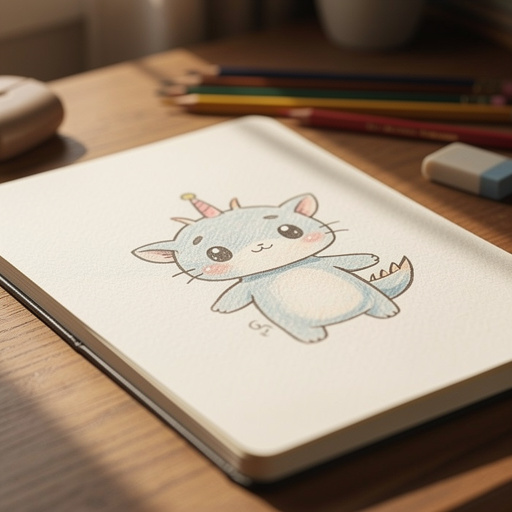
To create whimsical creature sketches, you need pencils and paper, taking about 30 minutes. Start by doodling basic shapes. This beginner-friendly activity has 10 steps and is perfect for families and aspiring artists of all ages.
What you need
Shop on Amazon · As an Amazon Associate we earn from qualifying purchases. Links above are affiliate links — we may earn a commission at no extra cost to you.
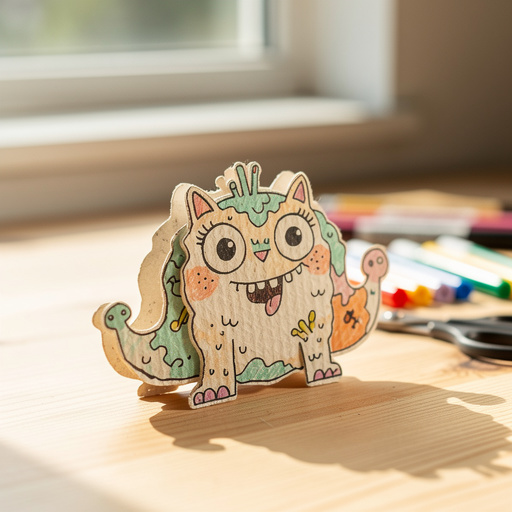
Embark on a delightful journey into the world of imagination with this easy guide to drawing whimsical creatures. This project is a fantastic way to tap into your creative spirit, offering a low-pressure environment for artistic exploration. Whether you're a complete beginner or looking for a fun family activity, sketching these fantastical beings is incredibly rewarding. It's a chance to invent characters that exist only in your mind, bringing them to life with just a pencil and paper. Get ready to discover the joy of creating something truly unique!
On this page
Step-by-Step Instructions
- 1
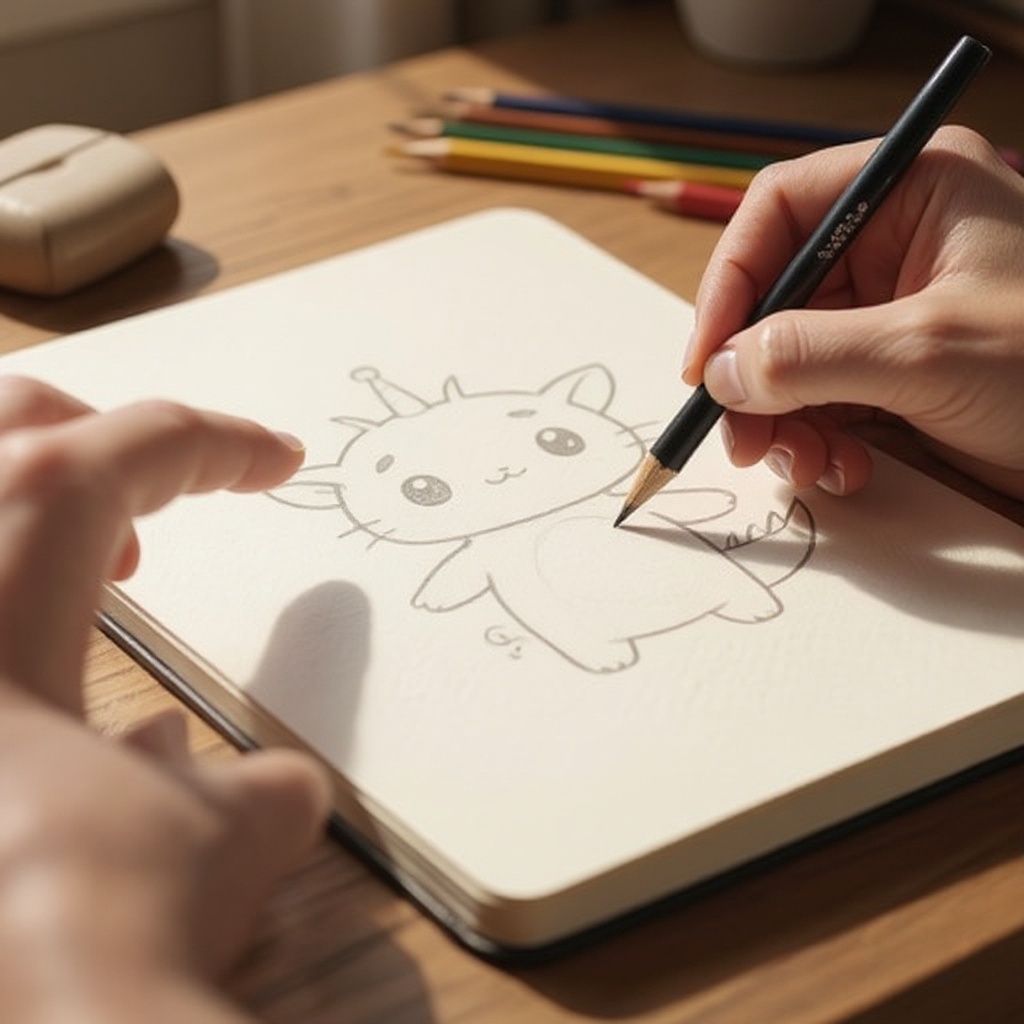
Begin by lightly sketching a few simple, abstract shapes on your paper. Think blobs, ovals, squiggles, or even sharp geometric forms like triangles and squares; these will serve as the foundational elements for your creature's body. Don't overthink this stage; the goal is to generate a variety of organic and geometric starting points to spark your creativity.
- 2
Choose one of your abstract shapes and begin to develop it into a basic body form. This could involve elongating an oval into a torso, rounding out a blob into a plump belly, or connecting several smaller shapes to create a segmented body. Focus on establishing a clear silhouette for the main mass of your creature.
- 3
Add a head shape to your creature, connecting it to the body. The head can be round, triangular, or even an unusual geometric form that contrasts with the body shape. Consider the overall proportion of the head to the body; a tiny head on a large body can be just as whimsical as the reverse.
- 4
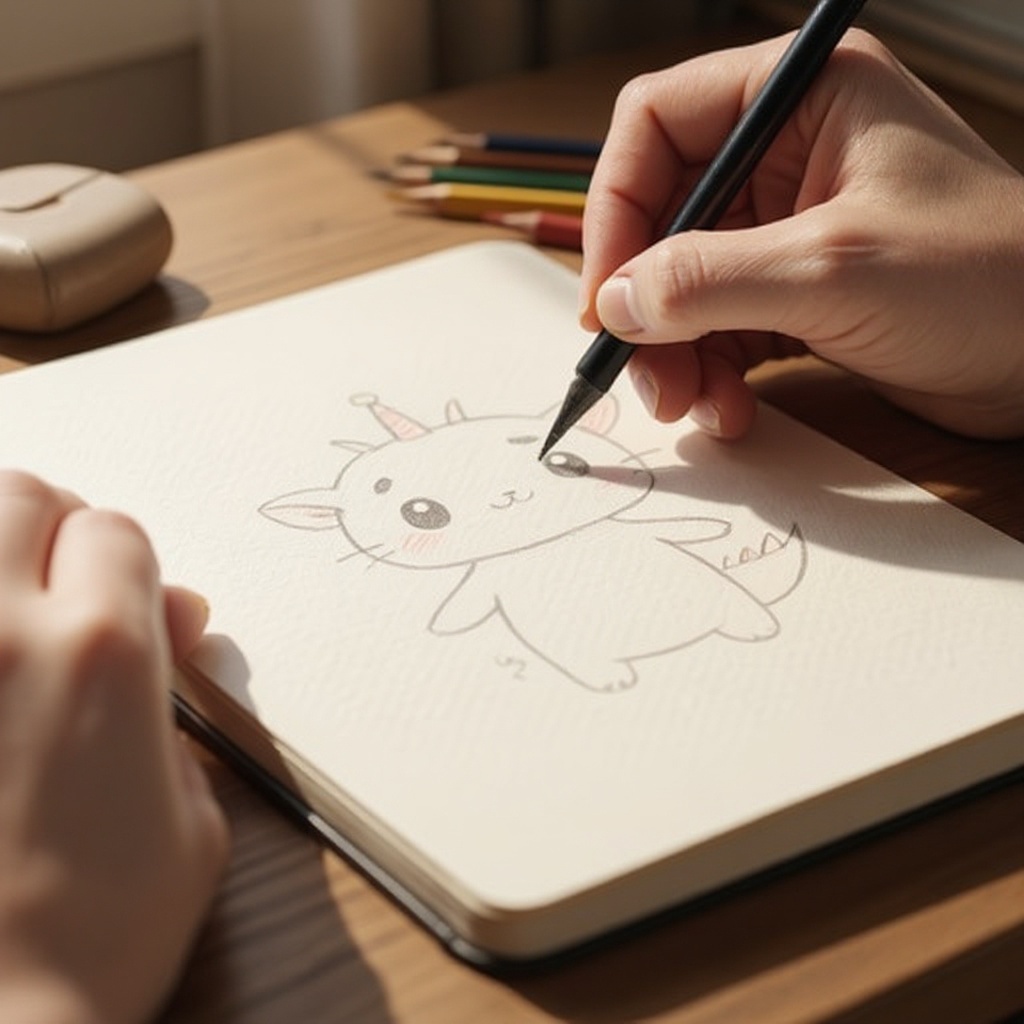
Draw a pair of eyes for your creature, experimenting with different shapes and placements. Eyes can be large and round, narrow and slit-like, or even multiple small dots clustered together. Their placement—close together, far apart, or even on stalks—greatly influences the creature's expression and personality.
- 5
Sketch out some simple ears or antennae to further define your creature's features. These can be pointed like a cat's, rounded like a rabbit's, or even elaborate, curly antennae reminiscent of an insect. Don't be afraid to give your creature more than two ears or to place them in unexpected locations.
- 6
Add limbs to your creature, which could be legs, arms, wings, or even tentacles. Keep these simple for now, focusing on their general placement and connection to the body. Think about how your creature might move; short, stubby legs suggest a waddle, while long, slender limbs might imply grace or speed.
- 7
Draw a tail or a trailing appendage to add a sense of movement and character. This could be a long, whip-like tail, a bushy plume, a series of segmented links, or even a trailing vine. The tail can balance the composition or add an extra layer of visual interest.
- 8
Go back and refine the outlines of your creature, making them a bit bolder and more defined. Trace over your initial light sketch lines, solidifying the form and giving your creature a more substantial presence on the page. This step helps to distinguish the creature from the background and any stray marks.
- 9
Add simple details to give your creature texture and personality. This could include drawing scales on a reptilian body, sketching soft fur patterns, adding small dots for a speckled appearance, or creating segmented lines for an insectoid look. These details bring your creature to life and hint at its nature.
- 10
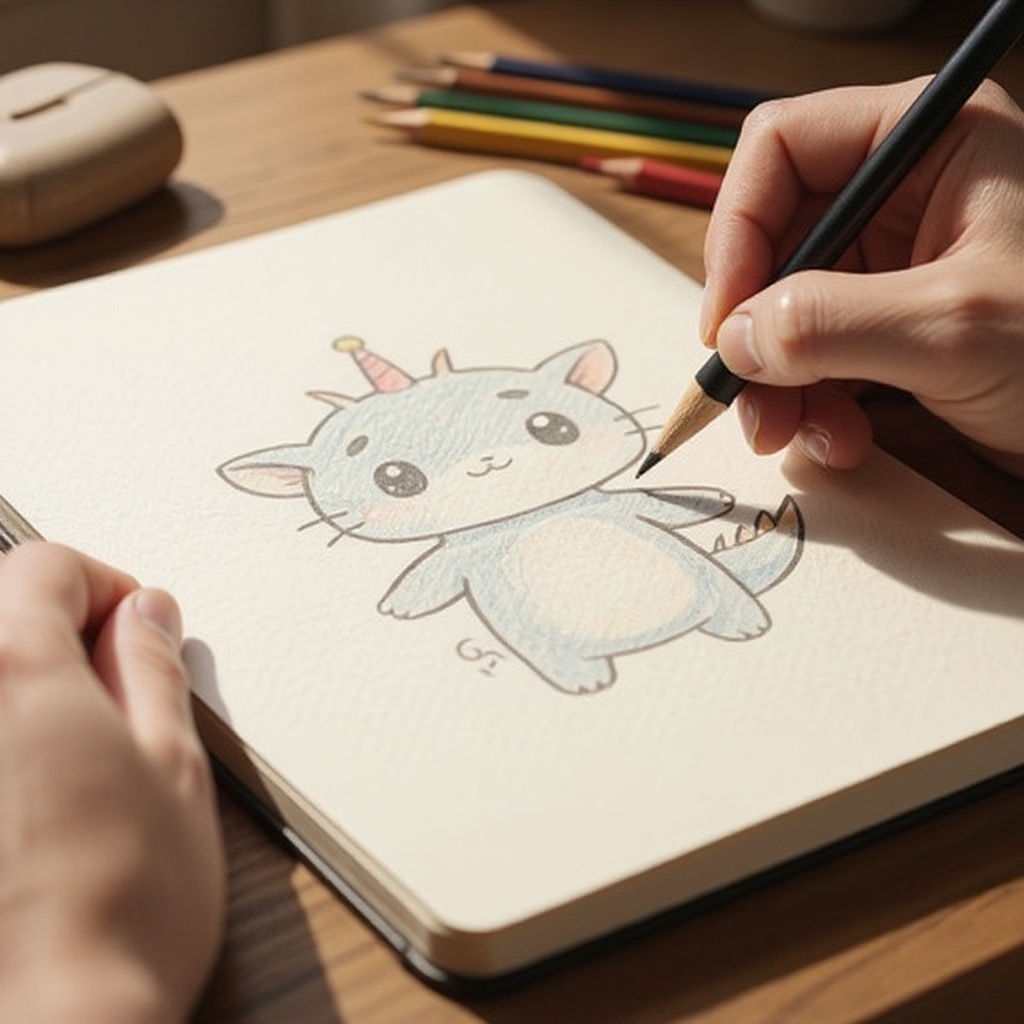
Use your pencil to add light shading to give your creature some dimension. Focus on areas where light might naturally hit or be cast, such as under the chin, on the underside of limbs, or along the edges of the body. This subtle shading creates a sense of volume and makes your creature appear more three-dimensional.
- 11
Introduce more complex textures and patterns. For instance, if you've drawn fur, you can add individual strands or tufts. If it's scales, vary their size and shape. Consider adding patterns like stripes, spots, or swirls to the creature's body or limbs, enhancing its visual appeal.
- 12
Refine the eyes and facial features. Add pupils, highlights, or even eyebrows to give your creature a more expressive face. Consider the emotion you want to convey – curiosity, mischief, or gentle curiosity – and adjust the features accordingly.
- 13
Develop the limbs further. Add joints, claws, paws, or suction cups depending on the type of creature you envision. Think about how these limbs would function and ensure they are integrated believably with the creature's body.
- 14
Add secondary appendages or decorative elements. This could include small horns, a frill around the neck, fins, or even small accessories like a tiny hat or a satchel. These elements further enhance the whimsical nature of your creation.
- 15
Begin to add more pronounced shading to create stronger contrasts. Use the side of your pencil lead to fill in larger areas with tone, and use the tip for more precise shading. Think about where the darkest shadows would fall to really make your creature pop.
- 16
Consider the environment or background. Even a simple suggestion of a ground line, a few wispy clouds, or a hint of foliage can help ground your creature and provide context. This doesn't need to be elaborate; a few simple lines can make a big difference.
- 17
Review your sketch and add any final details or adjustments. Look for areas that could benefit from more definition, shading, or texture. This is your chance to perfect your creation and ensure all the elements work harmoniously.
- 18
Erase any stray lines or smudges to clean up your drawing. A well-defined sketch looks more polished and professional. Use your eraser strategically to lift graphite and create subtle highlights where light would reflect most strongly.
Tips & Troubleshooting
- 1Don't be afraid to combine different shapes and ideas from various sources. The more unusual and unexpected the combination, the more unique and whimsical your creature will be. Think about merging elements from animals, plants, and even inanimate objects.
- 2If you get stuck or feel uninspired, try looking at everyday objects or animals for inspiration and then twist them into something new. For example, a teacup could become a creature's body, or a leaf could be transformed into a wing.
- 3Experiment with different pencil pressures to create varying line weights and shading effects. Light pressure creates delicate lines and soft shadows, while heavier pressure yields bold outlines and deep, rich tones, adding depth and dynamism to your sketch.
- 4Consider the personality of your creature as you draw. Is it shy and retiring, or bold and adventurous? Let its posture, facial expression, and the details you add reflect its character, making it more relatable and engaging.
- 5Don't aim for perfection on your first try. Whimsical creatures are all about embracing the unexpected and the imperfect. Enjoy the process of discovery and allow happy accidents to guide your drawing.
- 6Think about the scale and proportion of your creature's features. Exaggerated eyes, disproportionately long limbs, or a tiny head on a massive body can all contribute to a charmingly whimsical aesthetic.
- 7Practice drawing different textures. Smooth surfaces, rough bark, soft fur, or slimy skin can all be suggested with different pencil techniques, adding a tactile quality to your drawings.
- 8Save your sketches! Even if you feel a particular drawing isn't your best work, it can serve as a valuable reference for future projects or a reminder of your creative journey.
Related Activities You Might Enjoy
Frequently Asked Questions
What are some easy pencil drawing ideas for beginners?
Easy pencil drawing ideas for beginners often revolve around fundamental shapes and familiar subjects. Simple geometric forms like circles, squares, and triangles can be combined to create basic objects or characters. Basic animals, such as cats, dogs, or birds, can be simplified into their core shapes. Everyday objects like cups, books, or fruits are also excellent starting points. For a touch of imagination, beginners can try drawing simple, abstract creatures by doodling random shapes and then seeing what forms emerge. Focusing on fundamental lines, forms, and basic shading techniques makes learning enjoyable and builds confidence without overwhelming the artist.
How can I make my pencil drawings more interesting?
To make your pencil drawings more interesting, experiment with a variety of techniques that add depth and visual appeal. Varying your line weight – using both thin and thick lines – can create a sense of movement and emphasis. Experiment with different shading techniques, such as cross-hatching, stippling, or smooth blending, to create a range of tones and textures. Adding texture to surfaces, whether it's the roughness of wood or the softness of fur, makes your drawings more tactile. Playing with composition, adding a sense of depth with foreground and background elements, and focusing on creating unique characters or intriguing scenes will also elevate your work. Most importantly, don't be afraid to be creative and add your own personal touch and flair.
What materials do I need for easy pencil drawing?
For easy pencil drawing, the essential materials are quite minimal, making it an accessible hobby. Primarily, you will need graphite pencils of varying hardness. An HB pencil is a good all-rounder for general sketching and outlining, while a 2B or softer pencil is excellent for creating darker lines and richer shading. Drawing paper is crucial; standard printer paper can work for practice, but a dedicated sketchpad with slightly thicker paper will offer a better drawing surface and prevent bleed-through. A good eraser is also very helpful for making corrections, lifting graphite to create highlights, and refining details. A pencil sharpener is, of course, necessary to keep your pencils in good working order.
How do I draw a creature that looks unique?
Drawing a unique creature is all about creative combination and embracing the unexpected. Start by thinking outside the box and combining elements from different animals, plants, or even inanimate objects. For instance, imagine a creature with the body of a snail, the wings of a butterfly, and the legs of a spider. Consider unusual body parts, textures, and features that you wouldn't typically see together. Doodling abstract shapes first can also spark creative ideas, as you can then interpret these shapes as parts of a creature. Don't be afraid to exaggerate features or give your creature unexpected abilities or characteristics. The more you experiment with unusual pairings, the more unique your creation will become.
What is the best way to start sketching a whimsical creature?
The best way to start sketching a whimsical creature is by embracing spontaneity and letting your imagination lead the way. Begin with a loose, abstract doodle on your paper – think of random blobs, squiggles, or geometric shapes. Don't try to draw something specific at this stage; just let your pencil wander. Once you have a few interesting shapes, choose one that sparks your interest and begin to interpret it as a part of a creature, such as a body, head, or limb. This approach removes the pressure of starting with a perfect idea and allows the creature to emerge organically from the initial marks, fostering a sense of discovery and fun.
How can I add personality to my whimsical creature drawings?
Adding personality to your whimsical creature drawings involves focusing on expressive details and posture. Consider the creature's facial features: are its eyes wide with curiosity, narrowed in mischief, or droopy with sadness? The shape and placement of the eyes, mouth, and any eyebrows can convey a wide range of emotions. The creature's posture also plays a significant role; is it standing tall and proud, hunched over shyly, or in a dynamic pose suggesting action? Adding small details like a tilted head, a wagging tail, or even a tiny accessory can further enhance its character and make it feel more alive and relatable to the viewer.
What Next?
Congratulations on bringing your whimsical creature to life! This sketch is a wonderful standalone piece, but it also opens doors to further artistic adventures. Consider adding vibrant colors with colored pencils, watercolors, or markers to make your creature pop. You could also create a whole menagerie of these fantastical beings, building a unique world on paper. Store your sketches in a portfolio or frame your favorites to add a touch of personal magic to your home decor. Don't stop here – let your imagination continue to soar!
Free: 10 Paper Crafts Anyone Can Make in 5 Minutes
Get our beginner guide + new craft ideas weekly.
No spam. Unsubscribe anytime.
Did you complete this activity?