How to Create Whimsical Creature Doodles — Easy Step-by-Step Guide
Unleash your imagination and draw fantastical creatures with this easy-to-follow doodle guide. Perfect for screen-free family fun!

Quick answer
To create whimsical creature doodles, you need paper and drawing tools like pencils or pens, taking about 15-30 minutes. Start by sketching a basic shape. This beginner-friendly activity has 10 steps and is perfect for families and kids aged 6+.
What you need
Shop on Amazon · As an Amazon Associate we earn from qualifying purchases. Links above are affiliate links — we may earn a commission at no extra cost to you.
Dive into a world of pure imagination with our Whimsical Creature Doodles guide! This project is a delightful escape from the everyday, offering a screen-free activity that sparks creativity and brings fantastical beings to life. It's incredibly accessible, making it perfect for families looking for a fun bonding experience, budding artists of all ages, or anyone seeking a moment of playful artistic expression. You don't need to be an expert to create charming and unique creatures; the joy is in the process and the delightful surprises that emerge from your pen or pencil.
On this page
Step-by-Step Instructions
- 1
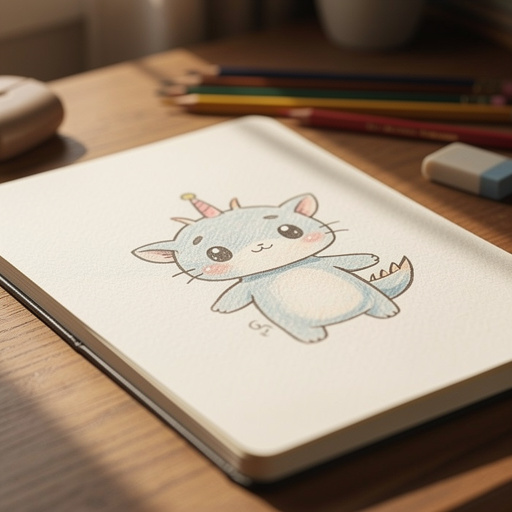
Start by lightly sketching a simple, rounded shape for the creature's body. Think of a blob, an oval, or a bean. This foundational shape will dictate the overall silhouette of your creature, so don't be afraid to make it slightly irregular or asymmetrical for added character.

- 2
Add a smaller circle or oval on top of the body for the head. Ensure this head shape is proportional to the body, but remember that whimsical creatures don't always follow strict anatomical rules, so a slightly oversized or undersized head can be perfectly charming.
- 3
Draw two large, expressive eyes on the head. They can be round, oval, or even a bit squashed, and consider placing them slightly off-center for a more curious or surprised look. Adding a small highlight within the pupil can give them a lively sparkle.
- 4
Add a small dot or a curved line for a nose. A tiny dot can suggest a delicate nose, while a gentle curve can imply a more prominent snout or beak-like feature.
- 5
Sketch a simple mouth below the nose. It could be a wide, happy smile, a downturned frown, or a surprised 'O' shape. The mouth is a great way to convey your creature's personality, so choose a shape that reflects its mood.
- 6
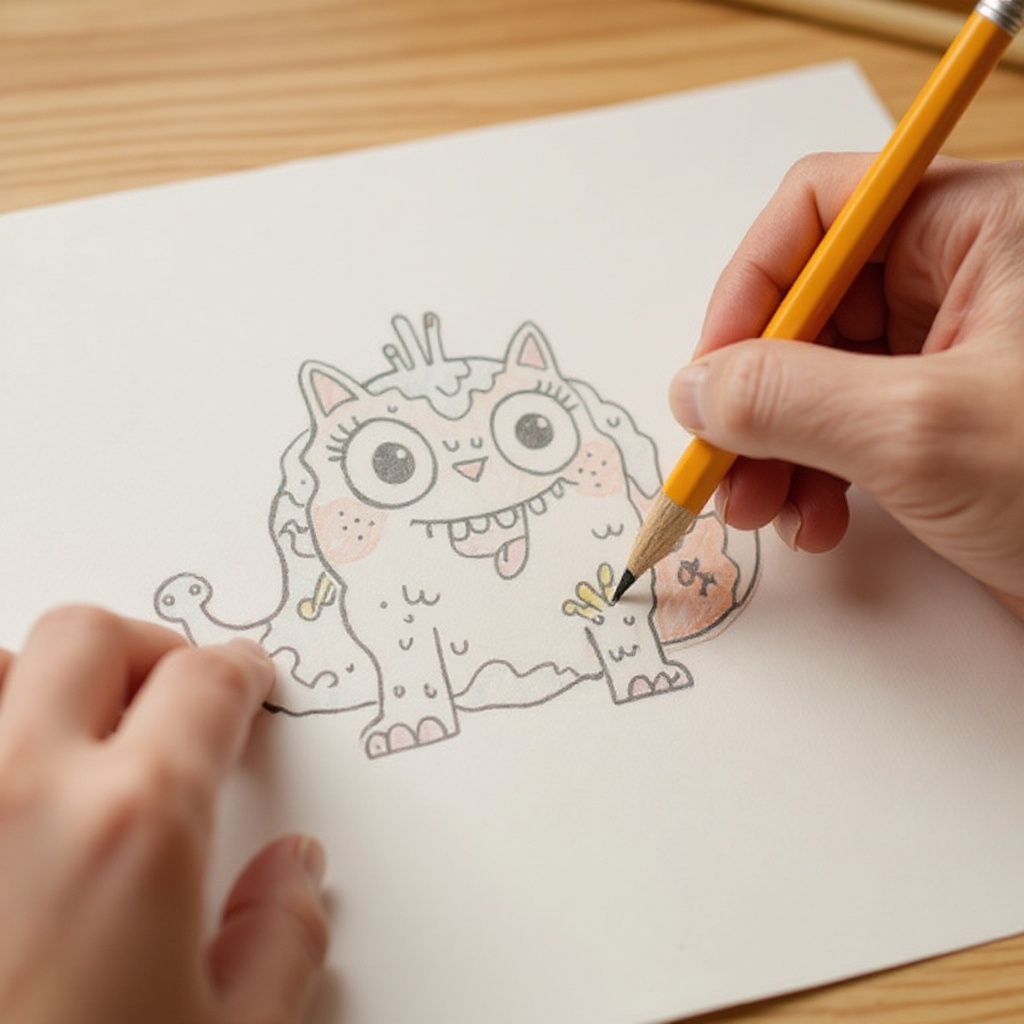
Add two simple ears to the head. They can be pointy like a cat's, round like a bear's, or floppy like a rabbit's. Experiment with different placements and shapes to enhance the creature's unique appearance.
- 7
Draw four simple legs or feet extending from the body. These can be short and stubby for a grounded feel, or long and thin for a more elegant or gangly look. Consider adding little paws, hooves, or even webbed feet.
- 8
Add a tail to the creature. It can be long and swirly, short and bushy, or even have a little tuft at the end. A tail can add a lot of dynamism and expressiveness to your creature's pose.
- 9
Now, add some fun details! Think about adding spots, stripes, scales, or even a little hat or accessory. This is where your creature truly comes to life and develops its unique identity.
- 10
Consider adding a neck or a collar if your creature's head and body feel too disconnected. A simple curved line can create a subtle neck, or you could add a decorative collar with a bell or a gem.
- 11
Think about adding limbs beyond the basic four legs. Perhaps your creature has small, dexterous arms, or maybe it sports a pair of delicate wings. These additions can dramatically alter the creature's form and function.
- 12
Introduce texture to your creature's body. You can achieve this by drawing small dots for a furry texture, wavy lines for scales, or short dashes for a spiky appearance. This adds depth and visual interest.
- 13
Add some simple background elements to give your creature context. This could be a few blades of grass, a small cloud, or a few scattered stars. Keep it simple so the focus remains on your creature.
- 14
Go over your pencil lines with a black fine-tip marker if you like, carefully tracing the shapes you've created. This step helps to define your creature and make it stand out, especially if you plan to color it.
- 15
Erase any stray pencil marks that are no longer needed. This will give your drawing a clean and polished look, ensuring that only your intended lines are visible.
- 16
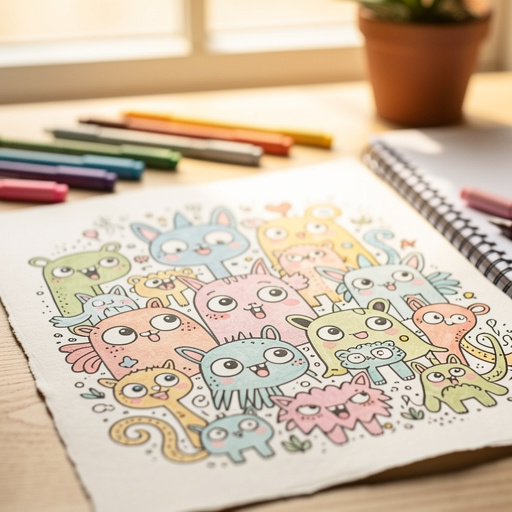
Color your creature if you wish! Use colored pencils, crayons, or markers to bring your creation to life with vibrant hues. Don't be afraid to use unusual color combinations to enhance its whimsical nature.
Tips & Troubleshooting
- 1Don't worry about perfection! The goal is to have fun and be creative. Embrace wobbly lines and unexpected shapes, as these imperfections often contribute to the charm and uniqueness of a doodle.
- 2Combine different animal features. What if your creature had wings like a bird and legs like a frog? Mixing and matching characteristics from various animals can lead to truly original and surprising designs.
- 3Think about the creature's personality. Is it happy, grumpy, shy, or adventurous? Let that guide your drawing by influencing its facial expression, posture, and any accessories you add.
- 4Try drawing your creature in different poses or doing different activities to explore more doodle ideas. Imagine it leaping, sleeping, eating, or even flying to create a dynamic range of illustrations.
- 5Experiment with different line weights. Using a thicker marker for the outline and a thinner pen for internal details can add visual hierarchy and make your creature pop off the page.
- 6Consider the environment your creature lives in. Is it a forest dweller, a cloud creature, or a deep-sea explorer? This can inspire the colors, textures, and accessories you choose to add.
- 7Give your creature a name! Naming your creation can help you connect with it and further develop its backstory and personality, leading to even more interesting drawing possibilities.
- 8Don't be afraid to make mistakes and learn from them. Sometimes the most interesting features emerge from an accidental smudge or an unexpected line. Embrace the happy accidents!
Related Activities You Might Enjoy
Frequently Asked Questions
What are some easy doodle ideas for beginners?
For beginners, starting with simple geometric shapes is a fantastic way to build confidence. Think about drawing circles, ovals, squares, and triangles and then combining them to form basic characters or objects. Basic animals like cats, dogs, or birds, drawn with simplified shapes, are also excellent starting points. Flowers, stars, and abstract patterns are equally accessible. A great technique is to focus on one element at a time; for instance, dedicate a page to drawing only eyes in various shapes and expressions, or practice drawing different types of tails. This focused approach helps in mastering individual components before assembling them into more complex doodles.
How can I come up with unique doodle ideas?
Generating unique doodle ideas is all about observation and imagination. Start by looking at the world around you and combining elements from different things you see. For example, what if a teacup had legs and a face, or a cloud had wings? Think about fantastical creatures from myths and legends, or invent your own by merging characteristics of existing animals. Don't be afraid to give everyday objects unusual features or to imagine creatures that defy the laws of physics. The key is to experiment without judgment, let your imagination run wild, and embrace the unexpected outcomes that arise from playful experimentation.
What materials do I need for doodling?
For basic doodling, the essentials are surprisingly simple: just a piece of paper and a pencil with an eraser. A medium-hardness pencil (like an HB) is ideal as it provides a good balance between darkness and erasability. To add more definition and visual appeal, you can also incorporate fine-tip black pens or markers, which are great for outlining and adding details. Colored pencils, crayons, or markers are wonderful for bringing your creations to life with vibrant colors. Experimenting with different tools can reveal new possibilities and help you discover your preferred style for doodling.
How can I make my doodles more interesting?
To elevate your doodles from simple sketches to captivating creations, focus on adding layers of detail and personality. Experiment with different line weights; use thicker lines for outlines and thinner lines for internal details to create visual depth. Incorporate texture by using dots, dashes, or wavy lines to represent fur, scales, or feathers. Patterns like stripes, swirls, or polka dots can add visual interest to the creature's body or accessories. Shading can also add dimension, giving your creature a more three-dimensional feel. Most importantly, consider the creature's personality or a potential story behind it, and let that guide your artistic choices.
What are some ways to develop a creature's personality through drawing?
Developing a creature's personality is a key element in making your doodles truly engaging. Start with the eyes; large, round eyes often convey innocence or curiosity, while narrow, slanted eyes might suggest mischief or suspicion. The mouth is another powerful tool; a wide smile speaks of happiness, a downturned mouth indicates sadness or grumpiness, and an 'O' shape can express surprise. Consider the creature's posture: is it standing tall and proud, hunched and shy, or perhaps in a dynamic pose suggesting energy and adventure? Even small details like accessories, such as a jaunty hat or a worn satchel, can hint at the creature's lifestyle and character.
Can I combine this doodling technique with other art forms?
Absolutely! Whimsical creature doodles are a fantastic springboard for other artistic endeavors. Once you have a creature you love, you can try painting it using watercolors or acrylics, focusing on blending colors and creating atmospheric backgrounds. You could also use your doodle as a basis for a clay sculpture, bringing your two-dimensional creation into the third dimension. For digital artists, scanning your doodle allows you to experiment with digital coloring, adding special effects, or even animating your creature. Furthermore, the storytelling aspect of doodling can lead to writing short stories or creating comic strips featuring your unique characters.
What Next?
Congratulations on creating your very own whimsical creature! Remember, the beauty of doodling lies in its freedom and spontaneity. Feel free to experiment with different color palettes, add more intricate patterns, or even give your creature a unique habitat. For your next project, try combining two creatures to create a hybrid, or perhaps draw your creature interacting with a fantastical landscape. Your completed doodles can be displayed on the fridge, compiled into a personal creature sketchbook, or even scanned and shared online to inspire others. Keep doodling and keep imagining!
Free: 10 Paper Crafts Anyone Can Make in 5 Minutes
Get our beginner guide + new craft ideas weekly.
No spam. Unsubscribe anytime.
Did you complete this activity?