How to Draw Whimsical Doodle Creatures — Easy Step-by-Step Guide
Unleash your imagination and create unique, playful doodle creatures with this simple drawing guide. Perfect for screen-free family fun!
Quick answer
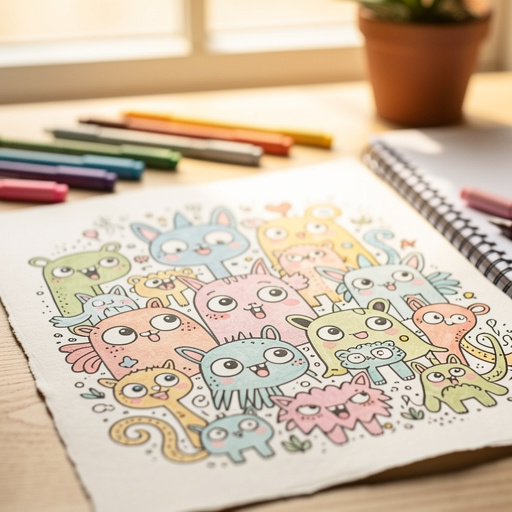
To draw whimsical doodle creatures, you need paper, pencils, and markers, taking about 20 minutes. Start by drawing a basic shape for the body. This beginner-friendly activity has 10 steps and is perfect for families and kids of all ages.
What you need
Shop on Amazon · As an Amazon Associate we earn from qualifying purchases. Links above are affiliate links — we may earn a commission at no extra cost to you.
Embark on a delightful artistic adventure with our Whimsical Doodle Creatures guide! This project is a fantastic way to tap into your creative spirit, offering a low-pressure environment for artistic exploration. It's perfect for anyone looking to de-stress, spark imagination, or enjoy quality screen-free time with family and friends. Whether you're a complete beginner or a seasoned artist seeking a playful outlet, these charming creatures are sure to bring smiles and a splash of color into your world. Get ready to let your imagination run wild!
On this page
Step-by-Step Instructions
- 1
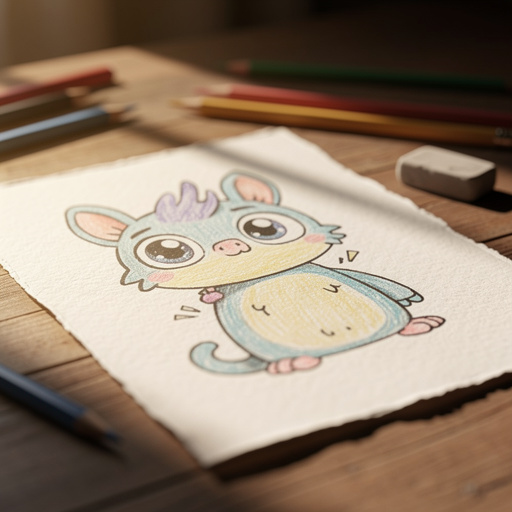
Lightly sketch a large, simple shape for the creature's body in the center of your paper. Think circles, ovals, or even cloud shapes; the key is to keep it basic and open to interpretation. Avoid making it too complex at this stage, as this initial shape will be the foundation for your doodle friend.

- 2
Add two smaller circles or ovals above the body shape for eyes. These can be placed close together for a curious look or further apart for a more surprised expression. Ensure they are roughly the same size and placement to maintain symmetry, unless you're intentionally going for a lopsided, quirky look.
- 3
Draw a simple curved line below the eyes for a mouth. You can make it a gentle smile, a surprised 'O', a mischievous grin, or even a small, thoughtful frown. The mouth is a great way to convey the creature's personality, so experiment with different curves and lengths.
- 4
Add a few small dots or circles inside the eyes to represent pupils. These can be placed centrally for a direct gaze, or off to the side to suggest the creature is looking at something specific. You can also add a tiny white dot to create a highlight, giving the eyes a bit more life and sparkle.
- 5
Sketch two simple shapes for ears on top of the head, like triangles, rounded bumps, or even floppy shapes. These can be symmetrical or asymmetrical, adding to the creature's unique character. Consider how the ears might express emotion – perked up for alertness, or droopy for sadness.
- 6
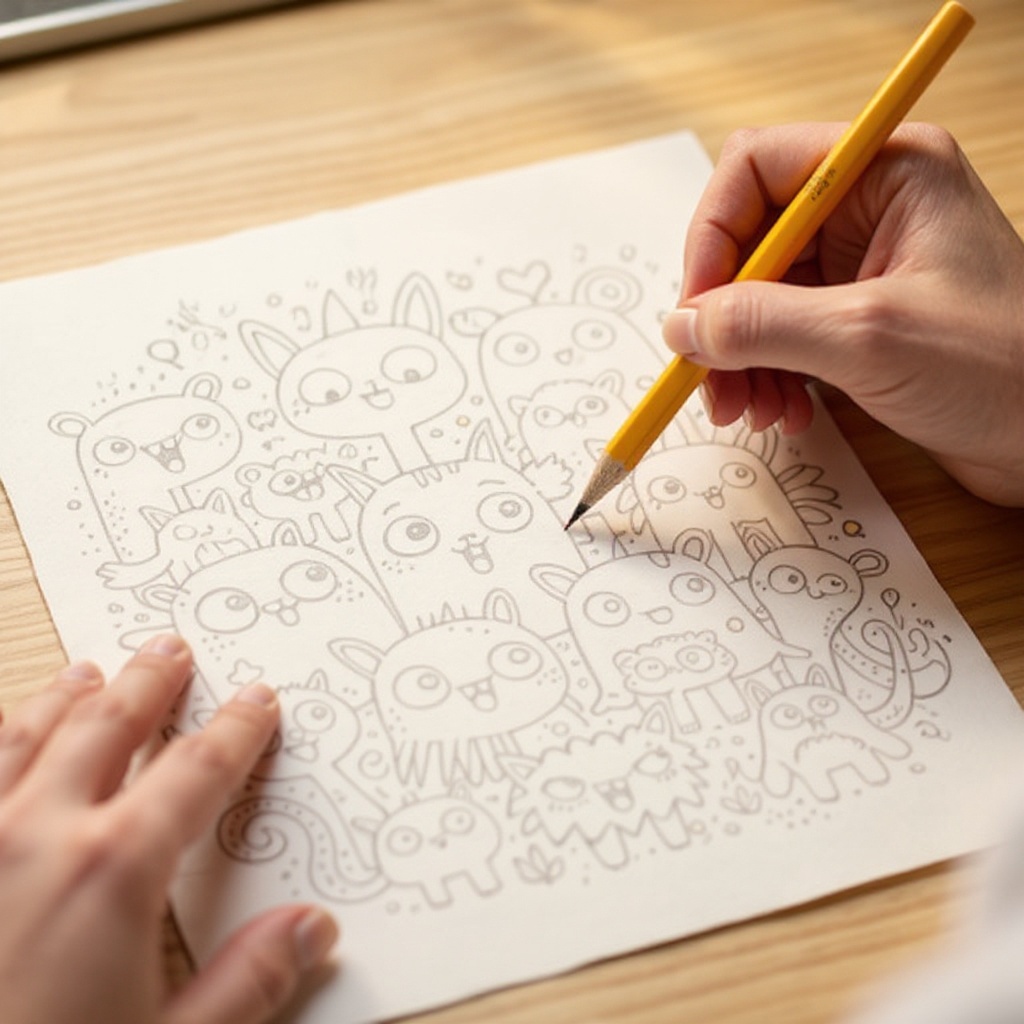
Draw two short, stubby legs extending from the bottom of the body. These can be simple rectangles, rounded stumps, or even little paw shapes. Think about how your creature might move; will it waddle, hop, or stand still?
- 7
Add a simple tail shape, like a swirl, a zig-zag, or a fluffy puff, coming from the back of the body. The tail is another excellent opportunity to add personality; a curly tail might suggest playfulness, while a spiky one could imply a bit of sass.
- 8
Now, let's add some unique features! Draw a pair of antennae on its head, perhaps with little circles at the ends, or maybe some small, delicate wings sprouting from its back. You could also add a tiny nose, a few whiskers, or even a small hat to give your creature extra charm.
- 9
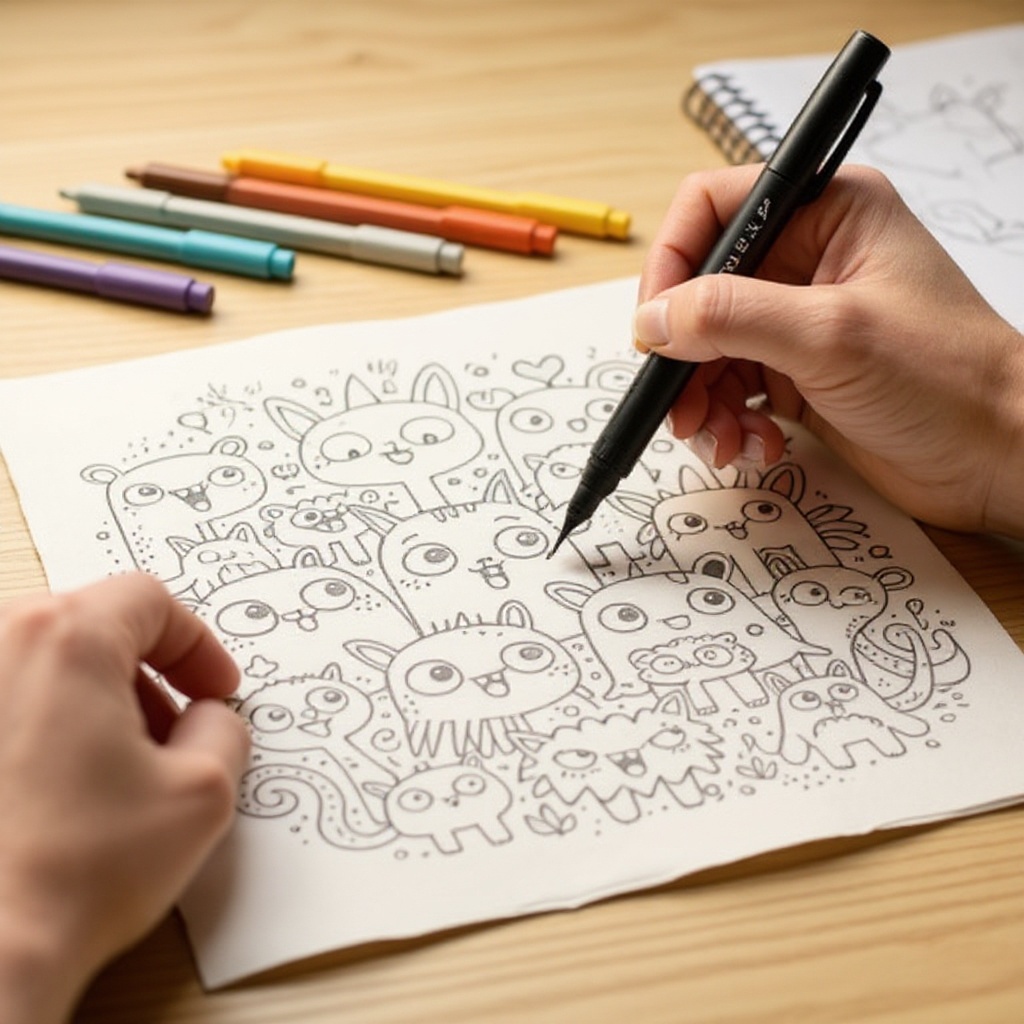
Use your fine-tip black marker to carefully outline all the pencil lines you want to keep. Go over your sketch with a steady hand, focusing on creating clean, crisp lines that define your creature's form. This step transforms your sketch into a bold illustration.
- 10
Erase any visible pencil lines that are no longer needed. Gently rub away the underlying pencil marks, ensuring you don't smudge the marker ink. This will give your doodle creature a polished and professional appearance.
- 11
Use colored markers or colored pencils to fill in your doodle creature with vibrant colors. Don't be afraid to use unusual color combinations or to fill different parts of the creature with contrasting hues. Think about what kind of personality your creature has and let the colors reflect that.
- 12
Add some final touches and details. You can add patterns to the creature's body, like stripes, polka dots, or squiggles, for added visual interest. Consider adding a simple background element, like a few stars or a patch of grass, to give your creature a context.
Tips & Troubleshooting
- 1Don't worry about perfection! The charm of doodle creatures comes from their unique and sometimes quirky nature. Embrace imperfections; a slightly wobbly line or an uneven eye can add to the creature's endearing personality. The goal is to have fun and express yourself, not to create a photorealistic masterpiece.
- 2Experiment with different body shapes and add extra limbs, antennae, or wings to make your creatures even more unique. Think outside the box: what if your creature had three eyes, or six legs, or a body shaped like a teacup? The possibilities are truly endless when you let your imagination guide you.
- 3Try adding patterns to the creature's body, like stripes, polka dots, or squiggles, for added visual interest. These patterns can be simple or intricate, and they can help to break up large areas of color. Consider how different patterns might complement the creature's overall design and personality.
- 4If you're drawing with younger children, help them with the outlining step to ensure clean lines. Young children may struggle with the fine motor control needed for precise marker work, so offering assistance with the outlining can prevent frustration and help them achieve a result they are proud of.
- 5Think about the creature's personality and let that guide your color choices. Is your creature shy and retiring? Perhaps soft pastels would be appropriate. Is it energetic and boisterous? Bold, bright colors would be a great fit. The colors you choose can tell a story about your doodle friend.
- 6Don't be afraid to combine different elements from various doodle creatures you've seen or imagined. Mix and match features, experiment with different textures, and create something entirely new. This is your chance to invent a creature that is truly one-of-a-kind.
- 7Consider the scale of your creature. Will it be a tiny, pocket-sized friend, or a giant, imposing being? The size of your initial body shape will influence the overall scale and impact of your doodle creature, so plan accordingly.
- 8Once you've finished drawing and coloring, take a moment to name your creature! Giving your doodle friend a name can help solidify its personality and make it feel even more real. This simple step adds another layer of engagement to the creative process.
Related Activities You Might Enjoy
Frequently Asked Questions
What are some easy drawing ideas for beginners?
Easy drawing ideas for beginners include simple shapes, basic animals, doodle creatures, and everyday objects. Focusing on fundamental shapes and outlines makes learning to draw accessible and fun for everyone. For instance, you can start by drawing a circle for a head, an oval for a body, and then adding simple features like eyes, a mouth, and limbs. Everyday objects like cups, books, or even fruits can be simplified into basic geometric forms. The key is to break down complex subjects into manageable parts and to not be afraid to experiment and make mistakes. Doodle creatures, in particular, are excellent for beginners because they encourage imagination and allow for a lot of creative freedom without the pressure of realism.
How can I make my drawings more creative?
To make your drawings more creative, try combining different shapes, adding unexpected details, using vibrant colors, and drawing from your imagination. Don't be afraid to break traditional rules and have fun with the process. For example, instead of drawing a standard cat, try giving it wings, or perhaps a body made of geometric shapes. Use colors that aren't typically associated with the object or creature you're drawing – a purple dog or a rainbow-colored tree can be incredibly striking. Storytelling is another great way to boost creativity; imagine a scenario for your drawing and let that inspire your composition and details. Regularly looking at diverse art styles and nature can also provide fresh inspiration.
What materials do I need for simple drawing?
For simple drawing, you primarily need paper, pencils, and an eraser. Adding markers or colored pencils can enhance your creations. These basic supplies are perfect for exploring various easy drawing ideas. A good quality sketchbook or even plain printer paper will suffice. For pencils, an HB or 2B pencil is ideal for sketching as it provides a good balance of darkness and erasability. A soft eraser that doesn't smudge is crucial for correcting mistakes without damaging the paper. Markers and colored pencils offer a way to add color and dimension to your drawings, transforming simple sketches into vibrant artworks. You don't need expensive supplies to start creating.
Are there drawing ideas for kids that don't require templates?
Yes! Doodle creatures, simple landscapes, and drawing from observation are great drawing ideas for kids that don't require templates. Focusing on basic shapes and imagination allows for endless creative possibilities. For doodle creatures, kids can start with a simple body shape and add unique features like extra eyes, funny ears, or silly legs. For simple landscapes, they can draw a horizon line and add basic elements like a sun, clouds, trees, and a house using simple shapes. Drawing from observation, such as sketching a favorite toy or a piece of fruit, helps children develop their observational skills and understand how to represent objects in a simplified way. These methods foster creativity and independence.
How long does it typically take to draw a whimsical doodle creature?
Typically, drawing a whimsical doodle creature can take anywhere from 15 to 30 minutes, depending on the complexity of the design and the artist's speed. The initial sketching phase, where you lay down the basic shapes for the body, eyes, and mouth, usually takes about 5-10 minutes. Adding details like limbs, tails, antennae, and other unique features might add another 5-10 minutes. The outlining with a marker and erasing stray pencil lines is a relatively quick process, often taking around 5 minutes. Finally, coloring the creature can vary significantly, from 5 minutes for simple fills to 15 minutes or more if you're adding shading or intricate patterns. This makes it an ideal activity for a short burst of creative fun.
What makes doodle creatures 'whimsical'?
The 'whimsical' nature of doodle creatures stems from their playful, imaginative, and often unconventional designs. They are not bound by the rules of reality or anatomy, allowing for a boundless expression of creativity. Whimsical creatures often feature exaggerated features, unexpected combinations of shapes and colors, and a general sense of lightheartedness and charm. They might have multiple eyes, unusual body parts, or be depicted in fantastical scenarios. The emphasis is on fun, surprise, and a touch of the absurd, rather than realism or technical perfection. This freedom from constraints is what makes them so appealing and enjoyable to create and to look at.
What Next?
Congratulations on bringing your whimsical doodle creatures to life! Don't stop here; continue to experiment with different shapes, textures, and color palettes to create an entire menagerie of unique beings. You can even combine your creatures into a fantastical scene or a vibrant doodle landscape. Consider framing your finished artwork to proudly display your creations, or use them as unique illustrations for homemade cards or storybooks. For your next project, try drawing a whole family of your doodle creatures or perhaps a habitat for them to live in!
Free: 10 Paper Crafts Anyone Can Make in 5 Minutes
Get our beginner guide + new craft ideas weekly.
No spam. Unsubscribe anytime.
Did you complete this activity?