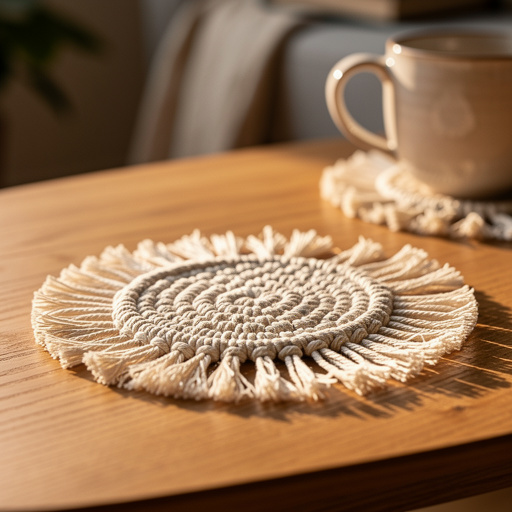
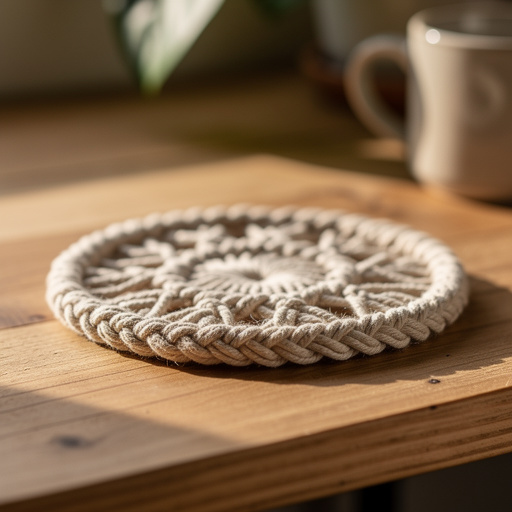
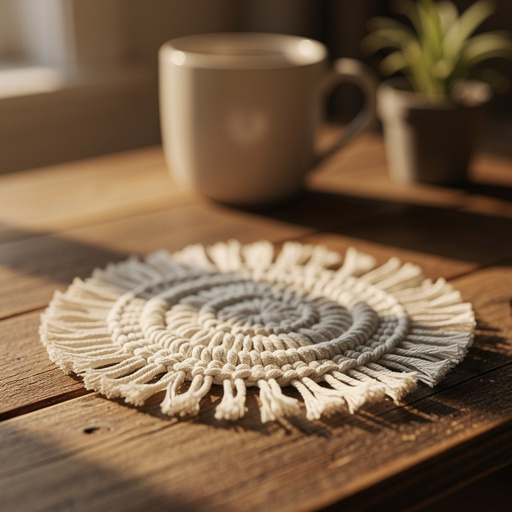
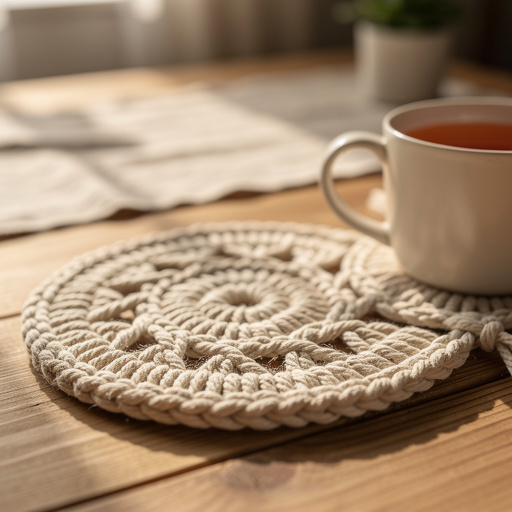
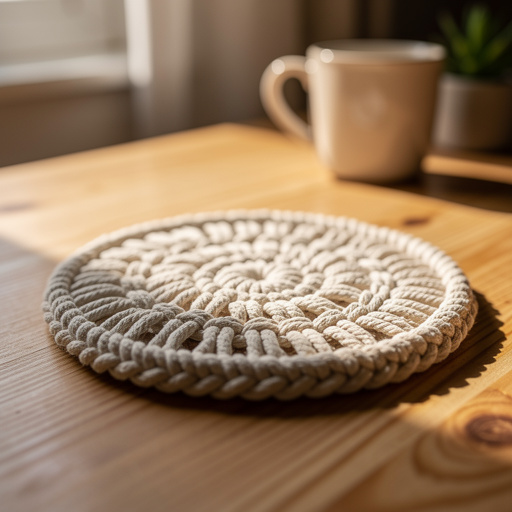
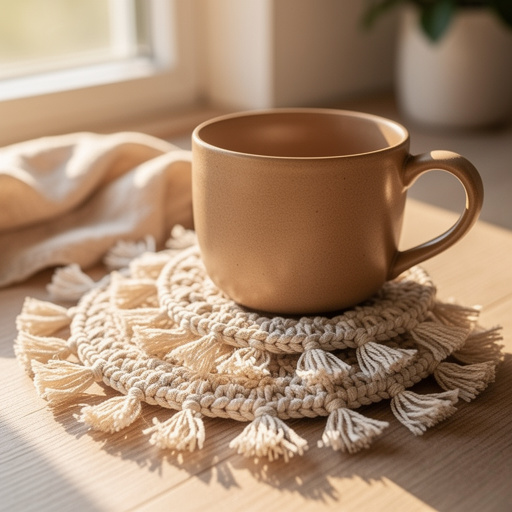
How to Make Simple Macrame Knot Coasters — Easy Step-by-Step Guide
Discover beautiful macrame patterns to create your own set of stylish coasters. A fun, screen-free activity for the whole family.

Quick answer
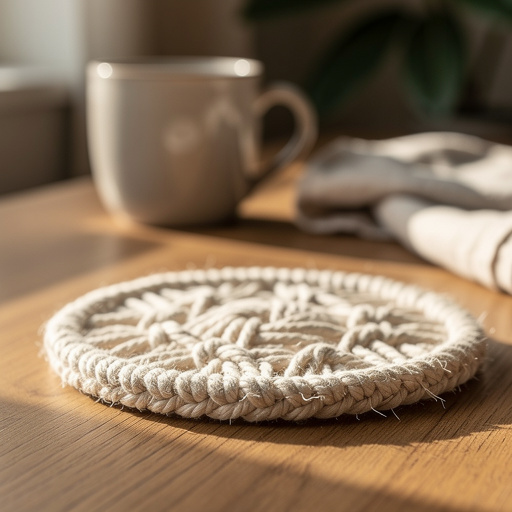
To make macrame coasters, you need cotton cord and scissors, taking about 20 minutes per coaster. Start by cutting your cords and folding them in half. This beginner-friendly activity has 10 steps and is perfect for families aged 8+.
What you need
Shop on Amazon · As an Amazon Associate we earn from qualifying purchases. Links above are affiliate links — we may earn a commission at no extra cost to you.
Welcome to the wonderful world of macrame! These simple knot coasters are the perfect entry point into this beautiful textile craft. Not only are they incredibly functional, protecting your surfaces from condensation and heat, but they also add a charming, bohemian touch to your home decor. This project is wonderfully screen-free, making it an ideal activity to share with family members, fostering creativity and a sense of accomplishment. In under 30 minutes per coaster, you can transform simple cord into a stylish accessory, proving that beautiful handmade items don't require advanced skills or expensive materials.
On this page
Step-by-Step Instructions
- 1
Cut four strands of macrame cord, each 24 inches long, for one coaster. Ensure your cuts are clean and straight to avoid fraying too early in the process, which can make knotting more difficult and less neat.
- 2
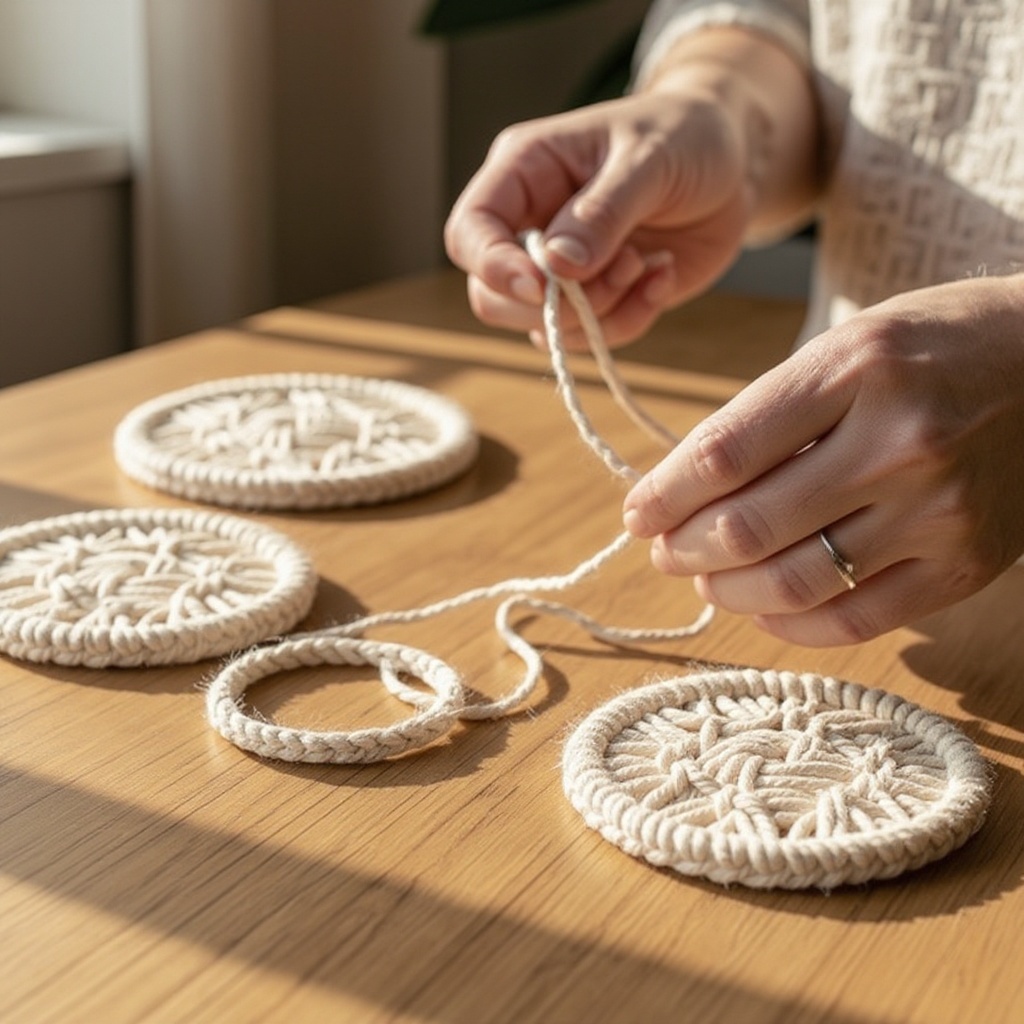
Fold each strand in half, creating a loop at the top. This loop will be the starting point for your macrame knots and will eventually be used to hang or secure the coaster if desired, providing a clean finish.
- 3
Gather all four folded strands together and hold them with the loops at the top. Make sure the ends of the cords are even at the bottom, creating a neat bundle that will serve as the foundation for your coaster.
- 4
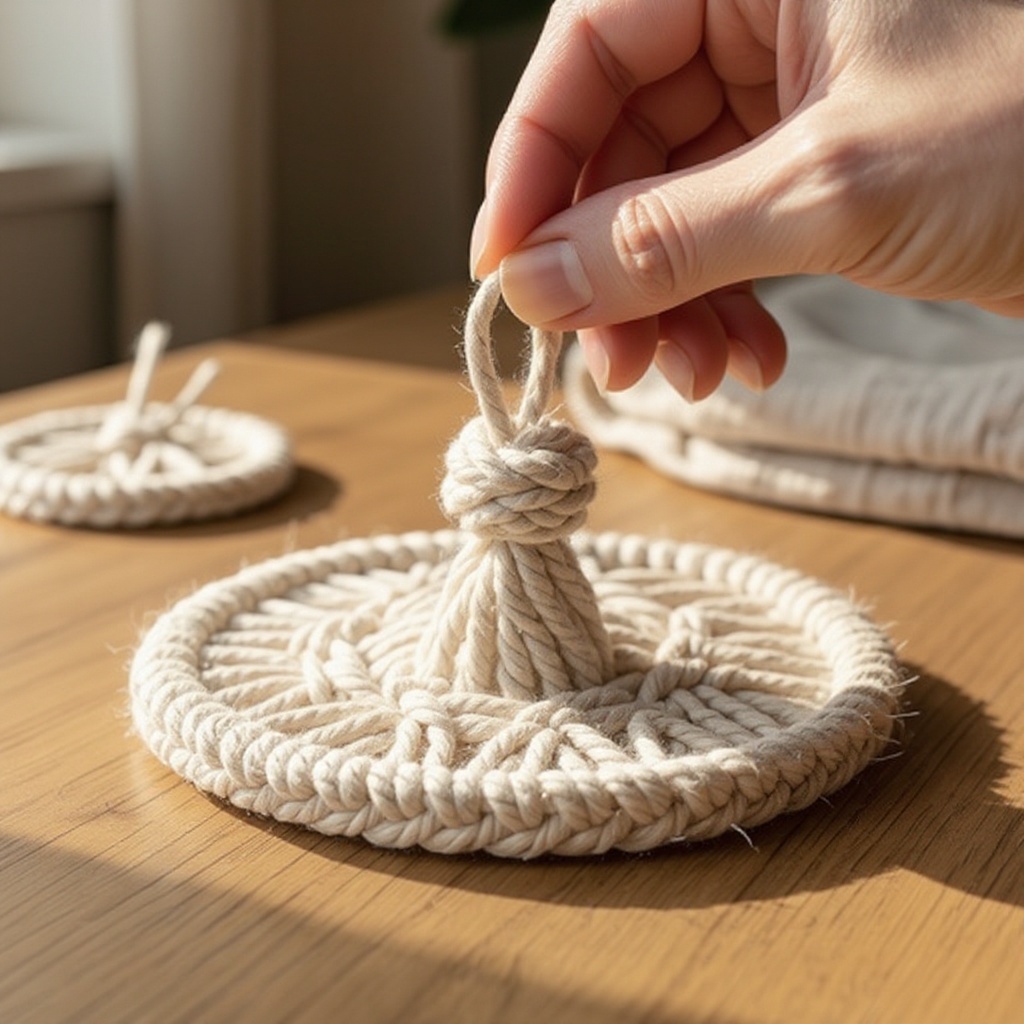
About 1 inch down from the top loops, tie a Lark's Head Knot using one of the strands to secure the bundle. To do this, pass the loop of the Lark's Head knot over the bundle of cords, then pull the two working ends of that strand through the loop, tightening it around the bundle. This knot anchors your work and prevents the cords from separating.
- 5
Separate the cords into two pairs. You will now have two distinct pairs of cords to work with for creating your knots, ensuring you have the correct number of working cords for each Square Knot.
- 6
Take the left strand of the first pair and bring it over the right strand, creating a '4' shape. This is the first part of forming a Square Knot, and it's crucial to keep the tension consistent to ensure all your knots look uniform.
- 7
Bring the right strand of the first pair under the '4' shape and up through the loop. Ensure you are using the rightmost cord of the pair to go behind and then through the opening created by the left cord, completing the first half of the Square Knot.
- 8
Pull both strands of the first pair to tighten, creating a Square Knot. Gently and evenly pull both the left and right working cords simultaneously to create a neat, firm knot. Avoid pulling too hard on one side, which can distort the knot and make it look uneven.
- 9
Repeat steps 6-8 with the second pair of cords to create another Square Knot. This will mirror the first knot and begin to establish the woven pattern of your coaster, creating a balanced and symmetrical look.
- 10
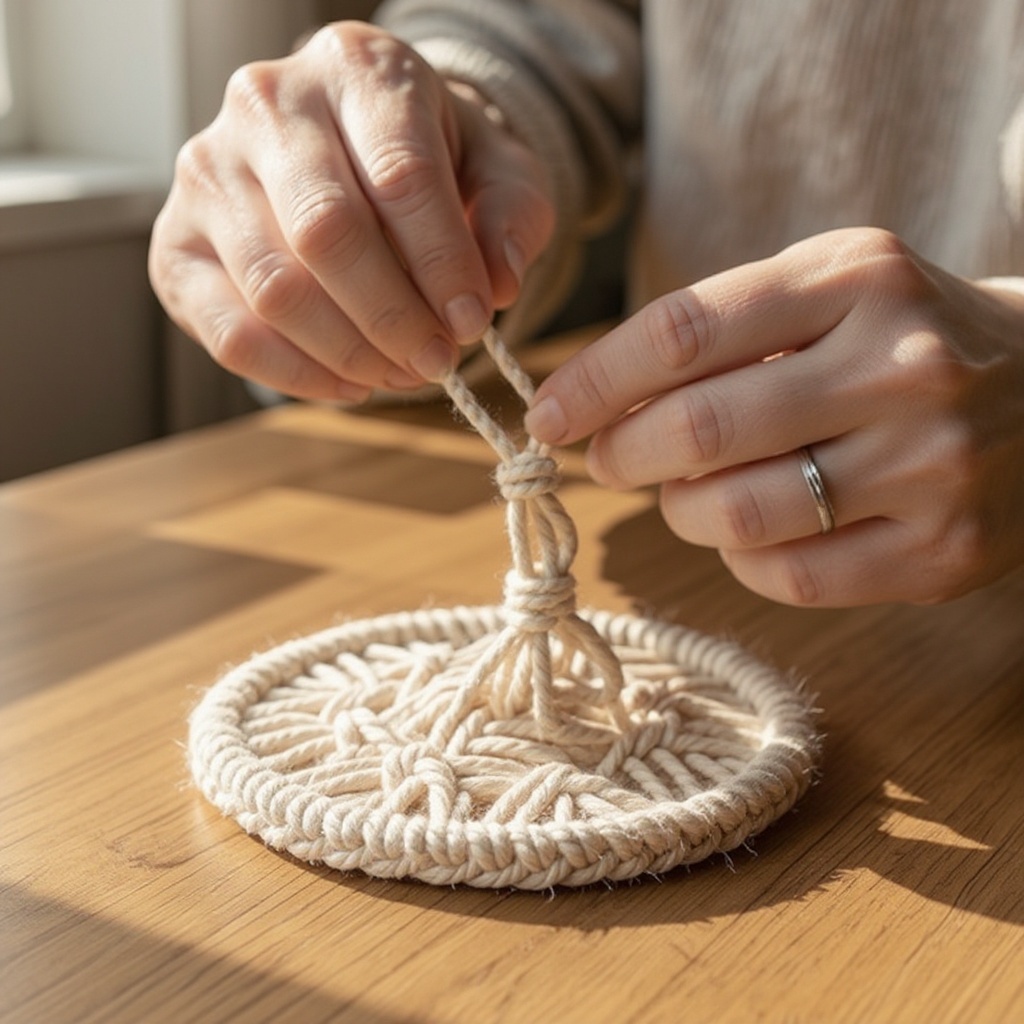
Continue creating Square Knots, alternating which pair you use for the next knot, until you have a woven pattern approximately 3 inches long. For instance, if you just knotted with the left pair, your next knot should be with the right pair, and so on, creating a staggered, textured effect that builds the body of the coaster.
- 11
Ensure that each Square Knot is tied snugly against the previous one, but not so tight that it causes the fabric to bunch up. This consistent spacing is key to achieving a smooth, professional finish on your macrame piece.
- 12
Once your desired length is reached, gather all four cords together. Ensure all the knots are lying flat and evenly before proceeding to the final securing step, checking for any loose threads or uneven tension.
- 13
Tie a simple overhand knot close to the last Square Knot to secure the pattern. This knot prevents the macrame work from unraveling and provides a clean finish to your coaster's design, acting as a final anchor.
- 14
Trim the excess cord ends about 1 inch below the overhand knot. Use your sharp scissors to make a clean cut, ensuring the remaining tails are of a uniform length for a tidy appearance.
- 15
Fray the ends of the trimmed cords slightly for a decorative finish. You can gently tease apart the fibers of each cord end with your fingers or a comb to create a soft, bohemian fringe that adds a charming touch to your handmade coaster. This step adds a lovely textural element.
Tips & Troubleshooting
- 1If your knots are uneven, gently pull on the working cords to adjust them before fully tightening. This is the best time to make minor corrections to ensure a professional and uniform look for your macrame pieces, as it's much harder to fix once the knot is fully set.
- 2Experiment with different cord colors or thicknesses for unique coaster designs. A thicker cord will create a more substantial coaster, while a thinner cord allows for more intricate knotting patterns and a more delicate look.
- 3To make a larger placemat, simply continue adding more rows of Square Knots, ensuring you use longer starting cords. You can also incorporate other basic macrame knots like the Spiral Knot or Double Half Hitch to create more complex and visually interesting designs.
- 4Keep your workspace tidy by using a clip or tape to hold the top loops while you knot. This prevents the cords from tangling and makes the knotting process much smoother and more enjoyable, especially when working with multiple strands.
- 5Practice your Square Knots on a scrap piece of cord before starting your coasters. Familiarity with the knotting technique will build your confidence and speed up your crafting process, allowing you to achieve a more consistent tension from the start.
- 6Ensure consistent tension throughout your knotting. Uneven tension is one of the most common reasons for beginner macrame projects to look unprofessional; aim for a steady, even pull with each knot to create a smooth, cohesive fabric.
- 7Don't be afraid to adjust the length of your cords. If you want a longer fringe or a more compact coaster, you can easily modify the initial cord lengths to suit your preferences, remembering that longer cords will result in more fringe.
- 8Consider adding a touch of glue to the final overhand knot before trimming. This can provide extra security and prevent fraying of the knot itself, especially if the coasters will see a lot of use or be handled frequently.
Related Activities You Might Enjoy
Frequently Asked Questions
What are the basic macrame knots for beginners?
The most fundamental macrame knots for beginners are the Lark's Head Knot and the Square Knot. The Lark's Head Knot is used to attach cords to a ring or to create a starting point, as seen in this coaster project where it secures the bundle of cords. The Square Knot, formed by two half-hitches, is the building block for many macrame patterns, creating a flat, textured surface that is ideal for projects like coasters and placemats. Mastering these two knots will open the door to a vast array of macrame projects, from simple coasters and keychains to more elaborate wall hangings and plant hangers. Practicing these basic knots consistently will build your confidence and dexterity for more complex designs.
How much cord do I need for macrame coasters?
For simple macrame coasters like these, you'll typically need four strands of cord, each about 24 inches long, for a standard size coaster. This length provides enough cord for creating the knots and a decorative fringe. However, it's always a good idea to cut your cords a little longer than you think you'll need, especially when you're starting out, as you can always trim excess. The exact length can be adjusted based on your desired coaster size, the thickness of your cord, and how dense you want your knotting pattern to be. For larger projects like placemats, you'll need significantly longer cords, potentially 60 inches or more per strand.
Can kids do macrame patterns?
Yes, kids aged 8 and up can absolutely learn macrame patterns with adult supervision. Simple projects like these coasters use basic knots that are easy to grasp and fun to create. The tactile nature of macrame is engaging for children, and it helps develop fine motor skills, patience, and focus. Ensure you choose age-appropriate projects and provide clear, patient guidance. Starting with thicker cords can be easier for smaller hands to manage, as they are less likely to tangle and easier to grip. The satisfaction of creating a finished product can be incredibly rewarding for young crafters, boosting their confidence and encouraging further creative pursuits.
How do I make macrame patterns more complex?
To make macrame patterns more complex, you can introduce additional knots like the Spiral Knot (also known as the Half Square Knot), Half Hitch, or Double Half Hitch. Combining these with different cord arrangements creates intricate designs. For example, using a Spiral Knot instead of a Square Knot will create a twisted, rope-like effect. You can also vary the number of cords used, create different densities of knots by tying them closer or further apart, and incorporate beads or other embellishments into your fringe or knotting. Experimenting with different combinations of these techniques will allow you to create increasingly sophisticated and unique macrame art pieces.
What is the best type of cord for macrame coasters?
For macrame coasters, 100% cotton macrame cord is highly recommended due to its softness, absorbency, and natural aesthetic. It's also relatively easy to work with and holds knots well, providing a good grip for beginners. A cord thickness of 3mm or 4mm is ideal for coasters, providing a good balance between being substantial enough to create a sturdy coaster and manageable for beginner knotting. While synthetic cords are available, cotton offers a more traditional and comfortable feel, and it's generally more eco-friendly. Avoid very thin cords, as they can be difficult to knot neatly and may not offer enough absorbency to effectively protect surfaces.
How long does it take to make one macrame coaster?
With practice, you can expect to make one simple macrame coaster in approximately 20 to 30 minutes. This timeframe includes cutting the cords, tying the knots, and finishing the fringe. For your very first coaster, it might take a bit longer as you get familiar with the steps and knots, perhaps closer to 45 minutes. As you become more proficient, you'll find your speed increases significantly, and you'll be able to create a set of coasters in an afternoon. This makes macrame coasters an excellent project for a quick crafting session or for making thoughtful, handmade gifts.
What Next?
Congratulations on creating your own set of beautiful macrame coasters! You've mastered the foundational Lark's Head and Square Knots, opening the door to countless other macrame projects. Feel free to experiment with different cord colors to match your decor or create themed sets. For a more elaborate design, consider adding a few rows of Spiral Knots or incorporating beads into your fringe. These coasters are perfect for gifting or displaying proudly in your own home. Store them neatly stacked to keep them looking their best, ready to protect your surfaces in style.
Free: 10 Paper Crafts Anyone Can Make in 5 Minutes
Get our beginner guide + new craft ideas weekly.
No spam. Unsubscribe anytime.
Did you complete this activity?